
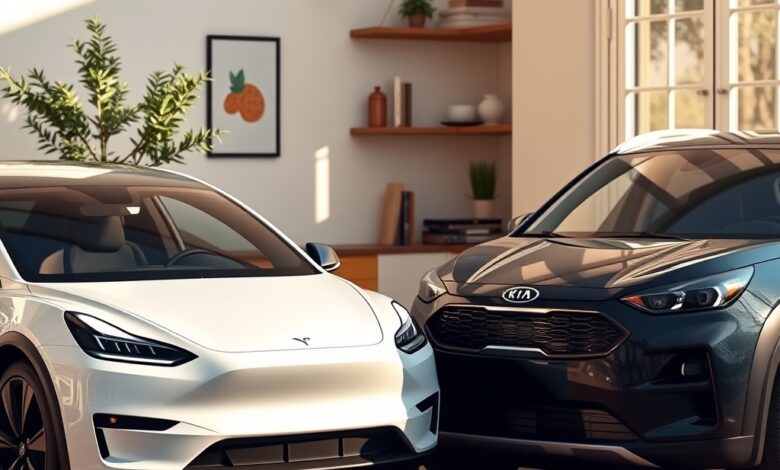
Why the EV Revolution Matters for Family SUVs
The automotive landscape is shifting faster than ever, and the surge of electric powertrains is redefining what families expect from their daily drivers. For parents who juggle school runs, weekend trips, and grocery hauls, the promise of zero‑emission family SUVs is no longer a futuristic fantasy—it’s a practical reality. Electric vehicles now deliver the space, safety, and convenience that modern households demand, while also slashing fuel costs and reducing carbon footprints.
Choosing the right electric family SUV means balancing range anxiety, interior versatility, and long‑term ownership costs. Two of the most talked‑about contenders for 2024 are the Tesla Model Y and the Kia EV6. Both promise cutting‑edge technology and respectable cargo capacity, yet they differ in price, charging ecosystem, and overall driving experience. This guide breaks down every angle you need to consider before making a family‑focused decision.
Key Buying Criteria for Family SUVs
Before you compare the Model Y and the EV6, it helps to outline the core criteria that matter most to families. These factors translate directly into everyday satisfaction and long‑term value.
Space and Practicality
- Seating capacity: Look for three‑row options or a flexible second row that can fold flat.
- Cargo volume: Measured in cubic feet, higher numbers mean more room for strollers, sports gear, and luggage.
- Child‑seat compatibility: LATCH anchors and ISOFIX points should be easy to reach.
Range and Charging Convenience
- EPA‑rated electric range: Aim for at least 250 miles to cover most daily trips without frequent stops.
- Charging network: A robust public fast‑charging network reduces range anxiety on long road trips.
- Home charging speed: Level 2 (7‑11 kW) chargers can replenish a battery overnight.
Safety and Driver Assistance
- Standard advanced driver‑assistance systems (ADAS) such as automatic emergency braking, lane‑keeping assist, and blind‑spot monitoring.
- High safety‑rating scores from NHTSA and IIHS.
- Family‑focused features like rear‑seat reminders and cabin cameras.
Total Cost of Ownership
- Purchase price vs. lease incentives.
- Federal and state EV tax credits.
- Projected maintenance savings (fewer moving parts, no oil changes).
- Insurance premiums for electric family SUVs.
2024 Tesla Model Y Deep Dive
The Tesla Model Y has become the benchmark for compact electric family SUVs since its launch. Its blend of performance, technology, and extensive Supercharger network makes it a top pick for tech‑savvy households.
Performance and Driving Dynamics
- Dual‑motor all‑wheel drive delivers 0‑60 mph in as quick as 4.8 seconds (Performance trim).
- EPA range varies from 244 miles (Standard Range) to 330 miles (Long Range).
- Regenerative braking feels natural and can be adjusted via the touchscreen.
Interior Space and Comfort
- Seating for up to five adults; optional third‑row seat (rarely used but available in some markets).
- 27 cu ft of cargo space behind the second row, expanding to 68 cu ft with rear seats folded.
- Panoramic glass roof adds a sense of openness for kids on long trips.
Technology and Infotainment
- 15‑inch central touchscreen controls virtually every vehicle function.
- Over‑the‑air software updates keep the car current without dealership visits.
- Built‑in navigation with real‑time Supercharger availability.
Safety and Driver Assistance
- Full Self‑Driving (FSD) package (optional) includes traffic‑light and stop‑sign recognition.
- Standard Autopilot with adaptive cruise control, lane‑centering, and automatic emergency braking.
- 5‑star NHTSA rating and IIHS Top Safety Pick+.
Ownership Costs
- Starting MSRP $49,990 for the Long Range version.
- Federal tax credit of up to $7,500 (subject to eligibility).
- Average annual maintenance cost under $300, according to Consumer Reports.
2024 Kia EV6 Deep Dive
Kia’s EV6 has quickly risen as a stylish and affordable alternative in the electric family SUV segment. Its bold design, fast charging capability, and generous warranty make it a compelling choice for families looking for value without sacrificing tech.
Performance and Driving Dynamics
- Two powertrain options: Standard‑range rear‑wheel drive (RWD) and high‑performance GT‑Line AWD.
- EPA range from 232 miles (Standard) to 310 miles (Long‑Range RWD).
- 0‑60 mph in 5.2 seconds (GT‑Line AWD) – quick enough for highway merges yet comfortable for city driving.
Interior Space and Comfort
- Seating for five with a flat‑floor rear seat that slides forward for extra legroom.
- 28.7 cu ft cargo capacity behind the second row, expanding to 58.3 cu ft with seats folded.
- Optional dual‑zone climate control and heated rear seats—great for colder climates.
Technology and Infotainment
- 12.3‑inch touchscreen paired with a digital instrument cluster.
- Kia’s “UVO” infotainment system supports Android Auto and Apple CarPlay wirelessly.
- Fast‑charging capability up to 350 kW, allowing an 80 % charge in roughly 18 minutes at compatible DC stations.
Safety and Driver Assistance
- Kia’s “Drive Wise” suite includes forward collision‑avoidance, lane‑keeping assist, and blind‑spot detection.
- High‑speed lane‑following assist for highway cruising.
- 5‑star NHTSA rating; IIHS Good rating for crashworthiness.
Ownership Costs
- Starting MSRP $45,795 for the Long‑Range RWD model.
- Federal tax credit up to $7,500; additional state rebates in many markets.
- 10‑year/100,000‑mile powertrain warranty—peace of mind for families planning long‑term ownership.
Head‑to‑Head Comparison: Model Y vs. EV6
Both the Tesla Model Y and Kia EV6 excel in different areas, and the best choice hinges on your family’s priorities—be it range, charging speed, interior flexibility, or overall cost. Below is a side‑by‑side look at the most relevant specifications for families.
Comparison of 2024 Electric Family SUVs
| Model/Option | Starting Price | EPA Range | Cargo Space (cu ft) | Fast‑Charging Speed | Key Feature | Best For |
|---|---|---|---|---|---|---|
| Tesla Model Y Long Range (AWD) | $49,990 | 330 miles | 68 (rear seats folded) | 250 kW (≈30 min for 80 %) | Extensive Supercharger network | Tech‑savvy families needing long range |
| Kia EV6 Long‑Range RWD | $45,795 | 310 miles | 58.3 (rear seats folded) | 350 kW (≈18 min for 80 %) | Ultra‑fast charging at 350 kW stations | Budget‑conscious families who value speed |
| Tesla Model Y Performance | $55,990 | 303 miles | 68 | 250 kW | Sportier handling and acceleration | Families who want performance plus utility |
| Kia EV6 GT‑Line AWD | $53,795 | 274 miles | 58.3 | 350 kW | All‑wheel drive with sporty tuning | Families in colder climates needing AWD |
Real‑World Driving Scenarios
- Weekly school run + grocery haul: Both models comfortably fit a child seat, a stroller, and a full grocery load. The Model Y’s larger cargo volume gives a slight edge when the rear seats are folded.
- Long‑distance vacation (800 mi): With Tesla’s Supercharger network, the Model Y can complete the trip with fewer stops, while the EV6’s 350 kW fast‑charging can recover more range in a shorter time at compatible stations.
- Cold‑weather mornings: The EV6’s heat pump and robust warranty help mitigate battery loss in sub‑zero temperatures, whereas the Model Y’s range may drop 10‑15 % in similar conditions.
Final Verdict: Which Family SUV Wins?
Both the 2024 Tesla Model Y and Kia EV6 deliver compelling packages for families, but the decision ultimately rests on what you value most.
Choose the Tesla Model Y if…
- You prioritize maximum electric range and a mature, nationwide fast‑charging network.
- You’re comfortable with a slightly higher purchase price for a larger cargo footprint.
Choose the Kia EV6 if…
- You’re looking for a lower entry price while still getting a premium feel.
- You value ultra‑fast charging capability that can refill the battery in under 20 minutes.
- You appreciate a longer powertrain warranty that reduces long‑term risk.
In the realm of electric family SUVs, there’s no one‑size‑fits‑all answer. Test‑drive both models, evaluate your typical weekly mileage, and consider the availability of charging stations along your most common routes. Whichever you pick, you’ll be stepping into a cleaner, more efficient future for your family’s transportation needs.
Frequently Asked Questions
Is it better to lease or buy an electric family SUV?
Leasing can lower monthly payments and let you upgrade to newer technology every 2–3 years, which is appealing if you expect rapid EV advancements. Buying, however, maximizes long‑term savings, especially when you benefit from federal tax credits and avoid mileage restrictions. For families that keep a vehicle for 5+ years, buying usually makes more financial sense.
How far can I realistically drive a family SUV on a single charge?
Most daily commutes fall well within the 250‑plus mile EPA ranges of the Model Y and EV6. For longer trips, plan charging stops using apps like PlugShare or Tesla’s navigation. Real‑world range may be 5‑15 % lower in extreme temperatures.