
Why the 2024 Electric SUV Segment Is Heating Up
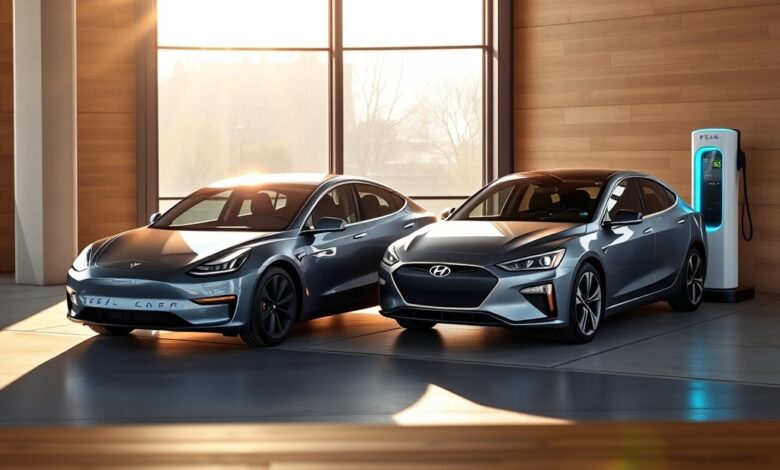
The automotive world is in the midst of a rapid electrification wave, and the electric SUV category has become the battleground for innovation, style, and practicality. Buyers who crave the higher driving position and cargo flexibility of an SUV now have the added benefit of zero‑emission powertrains. Among the most talked‑about contenders for 2024 are the Tesla Model Y and the Hyundai Ioniq 6, two vehicles that promise to redefine what an electric SUV can deliver.
In this guide, we’ll break down performance, technology, pricing, and real‑world ownership considerations so you can decide which electric SUV earns a place in your garage.
Performance and Powertrain: How the Model Y and Ioniq 6 Stack Up
When it comes to electric SUVs, acceleration, range, and efficiency are the primary metrics that influence buying decisions. Both Tesla and Hyundai have taken distinct approaches to achieve a balance of speed and practicality.
Motor Architecture and Output
- Tesla Model Y – Offers a dual‑motor all‑wheel‑drive (AWD) setup in its Long Range and Performance trims. The Long Range delivers 384 hp, while the Performance version pushes 456 hp.
- Hyundai Ioniq 6 – While technically a sedan, the Ioniq 6’s “SUV‑like” rear hatch and spacious interior qualify it as an electric SUV for many buyers. It comes with a single‑motor rear‑wheel‑drive (RWD) at 225 hp, and an optional dual‑motor AWD system that reaches 320 hp.
Acceleration and Driving Dynamics
Performance enthusiasts will notice the Model Y’s 0‑60 mph time of 4.8 seconds (Long Range) and an exhilarating 3.5 seconds in the Performance trim. The Ioniq 6, by contrast, clocks 0‑60 mph in 6.2 seconds with the AWD powertrain – respectable, but not a direct competitor in outright speed.
Both vehicles benefit from instant torque, but Tesla’s larger battery pack and more aggressive power delivery give it an edge on the drag strip. Hyundai focuses on a smoother, more comfortable ride, emphasizing handling stability and low‑center‑of‑gravity dynamics.
Range and Efficiency
- Model Y Long Range – EPA‑estimated 330 miles on a single charge.
- Model Y Performance – Slightly lower at 303 miles due to higher power output.
- Ioniq 6 RWD – EPA‑estimated 361 miles, the longest range among electric SUVs in its class.
- Ioniq 6 AWD – 305 miles, comparable to the Model Y Performance.
The Ioniq 6’s efficiency advantage stems from its aerodynamic silhouette (drag coefficient of 0.21) and a smaller, lighter battery pack that still delivers impressive range for daily driving.
Interior Comfort, Cargo Space, and Technology
Beyond performance, the day‑to‑day experience inside an electric SUV can make or break a purchase. Both manufacturers have invested heavily in cabin design, infotainment, and practicality.
Cabin Layout and Materials
- Tesla Model Y – Minimalist dashboard dominated by a 15‑inch touchscreen. Seating for up to seven with an optional third row, though the third row is best suited for children.
- Hyundai Ioniq 6 – A more traditional layout featuring a 12.3‑inch digital instrument cluster and a 10.25‑inch central infotainment screen. Seats five, but offers generous rear‑seat legroom thanks to its sedan‑derived platform.
Material quality in the Model Y can feel utilitarian, whereas Hyundai’s interior leans toward premium soft‑touch surfaces and ambient lighting, appealing to buyers who prioritize a refined cabin.
Cargo Capacity
The Model Y provides 68 cubic feet of cargo space with the rear seats folded, thanks to its hatchback design. The Ioniq 6, while technically a sedan, offers a versatile rear hatch and a trunk volume of 27 cubic feet, which is respectable for an electric SUV in its segment but falls short of the Model Y’s sheer volume.
Infotainment and Driver Assistance
- Tesla – Full self‑driving (FSD) beta (where available), over‑the‑air updates, and a robust app ecosystem. The touchscreen controls virtually all vehicle functions.
- Hyundai – Hyundai’s “SmartSense” suite includes Highway Driving Assist 2.0, blind‑spot monitoring, and a 12‑speaker premium audio system. The infotainment system supports Android Auto and Apple CarPlay natively.
Both brands deliver industry‑leading driver‑assist features, but Tesla’s FSD remains a controversial, subscription‑based add‑on, while Hyundai’s suite is included in most trims.
Pricing, Incentives, and Ownership Costs
Price is often the deciding factor for most shoppers. While both vehicles sit in the premium electric SUV bracket, their pricing structures and available incentives differ significantly.
Base MSRP and Trim Levels
- Model Y Long Range – Starts at $53,990.
- Model Y Performance – Starts at $58,990.
- Ioniq 6 RWD – Starts at $45,500.
- Ioniq 6 AWD – Starts at $51,500.
Federal and State Incentives
Both models qualify for the federal EV tax credit of up to $7,500, provided the buyer’s income qualifies and the vehicle’s battery capacity meets the latest criteria. Additional state rebates (e.g., California Clean Vehicle Rebate Project) can further reduce the effective purchase price by $2,000–$4,500.
Charging Costs and Maintenance
- Electricity cost per mile – Roughly $0.03 for both models when charging at home (assuming $0.13/kWh).
- Maintenance – EVs generally require less routine service. Tesla owners report fewer brake replacements due to regenerative braking, while Hyundai offers a 10‑year/100,000‑mile powertrain warranty, providing extra peace of mind.
Real‑World Ownership: What Buyers Should Consider
Choosing an electric SUV isn’t just about specs; it’s about how the vehicle fits into your lifestyle.
Charging Infrastructure
- Tesla Supercharger network – The most extensive fast‑charging network in North America, with over 12,000 stalls, offering up to 250 kW charging speed on V3 stations.
- Hyundai’s CCS compatibility – Access to the broader public fast‑charging network (e.g., Electrify America, ChargePoint) with up to 200 kW rates on select stations.
If you travel long distances regularly, the Model Y’s proprietary Supercharger access can translate into faster, more reliable charging stops.
Resale Value and Depreciation
Historically, Tesla’s strong brand cachet and OTA updates have helped it retain value better than many competitors. Recent data shows the Model Y holding about 65% of its original price after three years, whereas the Ioniq 6 is projected to retain around 58%.
Insurance and Taxes
Insurance premiums for the Model Y tend to be higher due to its performance capabilities and higher repair costs for aluminum body panels. The Ioniq 6’s more conventional construction often results in lower insurance rates.
Environmental Impact
Both vehicles produce zero tailpipe emissions, but the Ioniq 6’s superior aerodynamic efficiency yields a lower well‑to‑wheel carbon footprint, especially when charged with renewable energy sources.
Practical Buying Checklist for an Electric SUV
- Determine your daily driving range needs and compare EPA estimates.
- Assess access to fast‑charging networks along your typical routes.
- Calculate total cost of ownership, including incentives, insurance, and electricity.
- Consider interior space requirements for passengers and cargo.
- Test drive both models to gauge ride comfort and technology usability.
Comparison of Key Attributes
Comparison of 2024 Electric SUV Highlights
| Attribute | Tesla Model Y | Hyundai Ioniq 6 |
|---|---|---|
| Starting MSRP | $53,990 | $45,500 |
| EPA Range (Longest) | 330 miles | 361 miles |
| Power (Peak) | 456 hp (Performance) | 320 hp (AWD) |
| 0‑60 mph | 3.5 sec (Performance) | 6.2 sec (AWD) |
| Cargo Space | 68 cu ft (seats folded) | 27 cu ft |
| Driver‑Assist | Full Self‑Driving (optional) | SmartSense (standard) |
| Warranty | 4‑yr/50,000 mi | 10‑yr/100,000 mi (powertrain) |
| Charging Network | Tesla Supercharger | CCS (various public networks) |
Which Electric SUV Wins for You?
The answer depends on your priorities. If you value blistering acceleration, a massive Supercharger network, and a higher resale value, the Tesla Model Y is the clear front‑runner. Its optional third‑row seating also adds flexibility for larger families, albeit with limited space.
Conversely, if you prioritize range efficiency, a more traditional interior feel, and an industry‑leading warranty, the Hyundai Ioniq 6 makes a compelling case. Its aerodynamic design delivers the longest EPA range in this segment, and its lower starting price leaves room in the budget for additional accessories or home‑charging equipment.
Ultimately, both electric SUVs are strong contenders for 2024, and your decision should hinge on how each vehicle aligns with your daily driving habits, charging convenience, and long‑term ownership goals.
Frequently Asked Questions
Is it better to lease or buy an electric SUV?
Leasing can lower monthly payments and allow you to upgrade to newer technology every 2–3 years, but you’ll miss out on federal tax credits that are only available to purchasers. Buying lets you take full advantage of incentives, build equity, and benefit from potentially higher resale values, especially with a brand like Tesla.
How much mileage is considered “good” for a used electric SUV?
A used electric SUV with under 30,000 miles is generally considered low‑mileage and retains most of its battery health. Even vehicles with 50,000–70,000 miles can be a solid purchase if they come with a remaining battery warranty.
Can I install a home charger for both models?
Yes. Both the Model Y and Ioniq 6 use the J1772 standard for Level 2 charging (Tesla provides an adapter for non‑Tesla stations). A 7.2 kW home charger typically adds 30–40 miles of range per hour of charge.
What are the ongoing maintenance costs for an electric SUV?
Electric SUVs have fewer moving parts than gasoline counterparts. Expect routine tire rotations, brake fluid changes (if applicable), and occasional cabin‑filter replacements. Annual maintenance costs often range between $300–$500.
Do federal tax credits apply to both models?
Both the Tesla Model Y and Hyundai Ioniq 6 qualify for the federal EV tax credit of up to $7,500, provided the buyer meets income eligibility and the vehicle’s battery meets the latest phase‑out criteria.