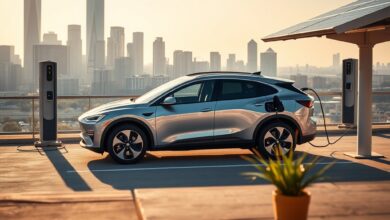


The automotive world is undergoing a quiet revolution as families trade gasoline‑guzzlers for cleaner, quieter rides. With electric cars becoming more affordable and charging infrastructure expanding rapidly, the decision to go electric is no longer just about saving the planet—it’s about stretching every dollar in the household budget. Yet the market is crowded with a mix of sleek sedans, roomy SUVs, and crossover wagons, each promising different ranges, tech perks, and price tags. Navigating this landscape requires a clear roadmap that balances performance, safety, and long‑term costs, so you can confidently pick the EV that fits your family’s needs without breaking the bank.
Choosing the Right Electric Cars for Your Family Budget
Before you start comparing models, set a realistic budget that reflects both the upfront price and the ongoing expenses of ownership. Families often overlook hidden costs such as home‑charging installation, insurance premiums, and potential depreciation. By establishing a comprehensive budget early, you’ll avoid surprise expenses that can turn an exciting purchase into a financial strain.
Calculate Total Cost of Ownership (TCO)
- Purchase price: Base MSRP plus destination fees and any dealer add‑ons.
- Incentives & rebates: Federal tax credit (up to $7,500), state rebates, and local utility discounts.
- Charging costs: Home charger installation (average $1,200–$1,800) plus electricity rates (typically $0.13/kWh).
- Maintenance: EVs have fewer moving parts, but budget for tire rotations, brake fluid changes, and occasional battery health checks.
- Insurance: Higher than average for some models due to repair costs; request quotes for each candidate.
- Resale value: Consider projected depreciation; popular models retain value better.
Use an online TCO calculator or spreadsheet to plug in these numbers. A realistic family TCO for a mid‑range EV often lands between $5,000 and $7,000 per year, far less than a comparable gasoline vehicle when fuel costs are accounted for.
Key Features to Prioritize in Family‑Friendly Electric Cars
When the budget is set, the next step is to match your family’s lifestyle with the EV features that matter most. Safety, interior space, and charging convenience often outweigh pure performance for households with children.
Range and Charging Needs
- Daily commute distance: Choose a model with at least 20‑30% more range than your typical round‑trip mileage to provide a safety buffer.
- Home charging speed: Level‑2 (240 V) chargers add 20–30 miles per hour; a 7‑8 kW unit is ideal for most families.
- Public charging network: Look for models that support fast‑charging (150 kW or higher) and have access to reliable networks like Electrify America, ChargePoint, or Tesla Superchargers.
Space, Safety, and Comfort
- Seating capacity: A minimum of five seats with easy‑access second‑row seats is essential for carpooling.
- Cargo volume: Aim for at least 15 cubic feet of rear cargo space; SUVs and crossovers typically exceed this.
- Safety ratings: Check NHTSA and IIHS scores; many electric cars achieve “Top Safety Pick+.”
- Child‑seat compatibility: Look for LATCH anchors in the second row and a flat floor for easy installation.
Top Family‑Focused Electric Cars in 2024
Below is a snapshot of the most popular electric cars that balance price, range, and family‑friendly features. All models listed meet or exceed a 250‑mile EPA range, offer a minimum of five seats, and have earned high safety ratings.
Comparison of Popular Family‑Friendly Electric Cars
| Model | Starting Price | EPA Range | Seating | Key Family Feature | Best For |
|---|---|---|---|---|---|
| Tesla Model Y | $49,990 | 330 miles | 5‑7 | Optional third‑row, extensive Supercharger network | Tech‑savvy families needing extra seats |
| Ford Mustang Mach‑E (Premium) | $48,500 | 305 miles | 5 | Spacious cargo floor, Ford Co‑Pilot 360 driver assist | Families who love a sportier look |
| Volkswagen ID.4 Pro | $38,995 | 260 miles | 5 | Generous rear‑seat legroom, easy‑to‑use infotainment | Budget‑conscious households |
| Hyundai Ioniq 5 (Long‑Range) | $44,250 | 303 miles | 5 | Fast 800 V charging, flat floor, rear‑seat USB‑C ports | Families needing quick top‑ups on road trips |
| Kia EV6 (GT‑Line) | $45,795 | 310 miles | 5 | Dual‑screen cockpit, spacious interior, 800 V charging | Style‑focused families |
While the Tesla Model Y leads in range and optional seating, the VW ID.4 offers the most competitive entry price. The Hyundai Ioniq 5 shines with ultra‑fast charging, making it ideal for long weekend getaways.
Financing vs. Leasing an EV: What Makes Sense for a Household?
Choosing how to pay for an electric car can dramatically affect your budget. Families often weigh the lower monthly payments of a lease against the long‑term equity of buying.
Pros and Cons of Each Option
- Buying (loan):
- Builds equity; you own the vehicle after the loan term.
- Eligible for federal tax credit (if purchased new).
- Higher monthly payments but no mileage limits.
- Potential resale value can offset total cost.
- Leasing:
- Lower monthly payments and often lower down payment.
- Access to the latest technology every 2–3 years.
- Mileage caps (typically 10,000–15,000 mi/yr) can be restrictive for road‑trip families.
- Tax credit goes to the leasing company, not the lessee.
For families that plan to keep the EV for at least 5‑7 years, buying usually offers the best total‑cost advantage. If you expect rapid tech upgrades or want to avoid long‑term maintenance worries, a lease may be more appealing—provided you can stay within the mileage allowance.
Future‑Proofing: Resale Value, Incentives, and Emerging Technology
Even after you’ve selected a model and financing method, consider how the vehicle will hold its value and what future incentives might apply.
Resale Value Trends
- EVs with larger battery packs tend to retain value better, as they promise longer useful life.
- Models with robust OTA (over‑the‑air) updates, like Tesla and Hyundai, maintain relevance longer.
- Certified pre‑owned (CPO) programs are expanding for EVs, offering warranty extensions that boost resale appeal.
Upcoming Incentives
Many states are rolling out additional rebates for home‑charging installations and for low‑income families purchasing electric cars. Keep an eye on annual budget bills and utility‑company programs that can add $500–$2,000 in savings.
Technology to Watch
- Solid‑state batteries: Expected in the early 2020s, they promise higher energy density and faster charging.
- Vehicle‑to‑grid (V2G): Allows your EV to feed electricity back to the home during peak demand, potentially offsetting utility bills.
- Advanced driver‑assist systems (ADAS): New families benefit from features like automatic emergency braking, lane‑keep assist, and traffic‑jam assist.
Choosing an EV that supports software updates ensures you’ll receive these advancements without needing a new car.
Practical Steps to Bring Your Family EV Home
Now that you’ve narrowed down models, financing, and future considerations, follow this checklist to make the purchase smooth and stress‑free.
- Test drive multiple candidates: Focus on visibility, rear‑seat access, and ease of loading strollers.
- Get a home‑charging quote: Many electricians offer free estimates; compare Level‑2 vs. Level‑3 options.
- Confirm incentive eligibility: Use the dealer’s paperwork or official government portals to verify tax credit qualifications.
- Secure insurance: Ask for multi‑vehicle discounts; some insurers offer lower rates for EVs equipped with safety tech.
- Schedule a pre‑delivery inspection: Verify battery health, software version, and that all promised accessories (e.g., cargo liner) are present.
By tackling each step methodically, you’ll minimize surprises and enjoy the peace of mind that comes with a well‑planned family purchase.
FAQ
Is it better to lease or buy an electric car for a family?
Buying usually offers better long‑term value because you build equity and can claim the federal tax credit. Leasing provides lower monthly payments and the ability to upgrade every few years, but mileage limits and the loss of the tax credit may make it less attractive for larger families.
How much range do I really need for a typical family?
Most families find a 250‑mile EPA range sufficient for daily commuting, school runs, and weekend trips, especially when a Level‑2 home charger can replenish 20–30 miles per hour of charging.
Can I install a charger in a rented home or apartment?
Many landlords now allow Level‑2 chargers with a simple agreement. If not, you can use public fast‑charging stations or consider a portable Level‑1 charger that plugs into a standard 120 V outlet.
Do electric cars lose value faster than gasoline cars?
Early EVs depreciated quickly, but newer models with larger batteries, OTA updates, and strong brand demand now retain value comparable to premium gasoline SUVs.
What incentives are available for low‑income families?
Some states and utilities offer additional rebates, reduced electricity