
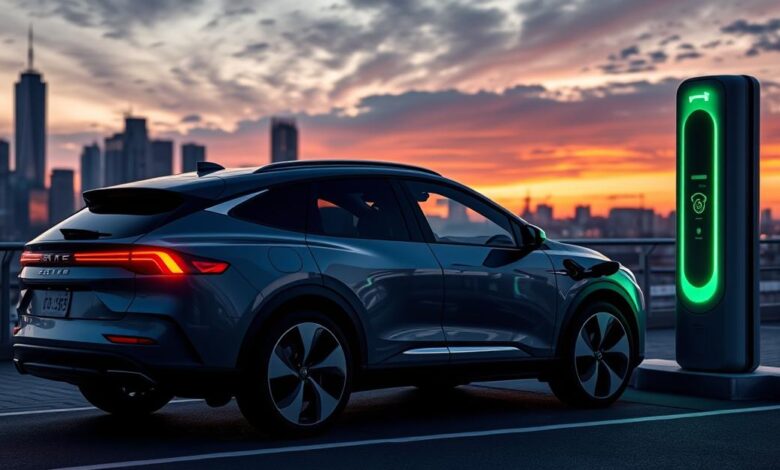
Why Electric SUVs Are Dominating 2024
The automotive landscape is in the midst of a seismic shift, and the rise of electric SUVs is the most visible sign of that change. With governments tightening emissions standards and consumers demanding more versatile, zero‑emission transportation, electric SUVs have become the sweet spot between practicality and sustainability. In 2024, buyers are no longer willing to sacrifice cargo space or off‑road capability for an electric drivetrain; they expect both. This surge in demand has prompted manufacturers to unleash a wave of new models, each promising longer range, faster charging, and premium tech that rivals traditional gasoline‑powered rivals. If you’re hunting for an electric SUV that fits your lifestyle and budget, understanding the key buying criteria is essential before you sign on the dotted line.
Key Criteria for Choosing an Electric SUV
Range and Battery Capacity
Range anxiety remains the biggest hurdle for many prospective EV owners. When evaluating electric SUVs, look for a real‑world EPA‑estimated range that comfortably exceeds your typical weekly mileage plus a safety buffer for unexpected trips. Battery capacity, measured in kilowatt‑hours (kWh), directly influences that range. A 75 kWh pack will generally deliver 250‑300 miles, while newer 100 kWh packs push past the 350‑mile mark.
- Check the EPA rating rather than the manufacturer’s “maximum” figure.
- Consider your climate; cold weather can shave 10‑20% off range.
- Look for models that support 200 kW+ DC fast charging to minimize downtime.
Performance and Drivetrain
Electric SUVs often come with instant torque, making acceleration feel effortless. However, performance expectations vary by segment. Luxury models may offer 0‑60 mph times under 4 seconds, while budget‑friendly options target a more modest 7‑8 seconds. All‑wheel drive (AWD) is common, using dual motors for enhanced traction on slippery surfaces.
- Dual‑motor AWD provides better handling in rain or snow.
- Single‑motor rear‑wheel drive can improve efficiency and lower cost.
- Check the torque figure; high torque improves hill‑climbing ability.
Interior Space and Practicality
One of the main reasons drivers choose SUVs is the generous cargo area and flexible seating. Electric SUVs often benefit from a flat floor, thanks to the under‑floor battery placement, which can increase legroom for rear passengers. Look for features such as a 60/40 split‑folding rear seat, a low loading height, and optional third‑row seating if you need to transport a larger family.
- Measure cargo volume (cubic feet) with seats up and folded.
- Check headroom and legroom specs for both rows.
- Consider roof‑rail capacity if you plan to carry bikes or cargo boxes.
Pricing, Incentives, and Ownership Costs
While the sticker price of electric SUVs can be higher than comparable gasoline models, federal tax credits, state rebates, and manufacturer incentives can offset the gap. Additionally, lower fuel and maintenance costs make the total cost of ownership (TCO) more attractive over a five‑year horizon.
- Federal tax credit: up to $7,500 depending on battery size and manufacturer.
- State incentives: many states offer additional rebates, reduced registration fees, or HOV lane access.
- Calculate TCO: include electricity cost per mile, insurance, and expected depreciation.
Top Electric SUVs to Consider in 2024
Luxury Segment
Tesla Model Y continues to dominate the premium electric SUV market with its minimalist interior, industry‑leading Supercharger network, and impressive 330‑mile EPA range. Its dual‑motor AWD delivers 0‑60 mph in 4.8 seconds, making it quick enough for most daily driving scenarios.
- Starting price: $49,990
- Key tech: Full Self‑Driving (beta), over‑the‑air updates
- Best for: Tech‑savvy commuters who value fast charging and resale value
Mercedes‑EQ EQB offers a more traditional luxury feel with a high‑quality cabin, optional third‑row seating, and a 260‑mile range. Its 80 kWh battery paired with a 225 hp rear‑motor provides a smooth, quiet ride.
- Starting price: $55,300
- Key tech: MBUX infotainment, augmented reality navigation
- Best for: Families seeking a premium badge and optional extra seats
Mid‑Range Segment
Ford Mustang Mach‑E blends sporty styling with practical SUV proportions. The California Route 1 trim offers a 305‑mile range and rear‑wheel drive, while the GT performance version pushes 0‑60 mph in 3.5 seconds.
- Starting price: $44,995
- Key tech: SYNC 4A with over‑the‑air updates, hands‑free driving assist
- Best for: Drivers who want a performance edge without a super‑luxury price tag
Kia EV6 stands out with its striking design, 310‑mile range (Long‑Range AWD), and 800‑volt fast‑charging architecture that can add 210 miles in just 18 minutes.
- Starting price: $48,750
- Key tech: Augmented reality head‑up display, vehicle‑to‑load (V2L) power outlet
- Best for: Early adopters who value cutting‑edge charging speed and style
Budget‑Friendly Segment
Hyundai Ioniq 5 has quickly become a favorite for its spacious interior, 303‑mile range (Long‑Range RWD), and affordable price point. The 77.4 kWh battery supports 220 kW DC fast charging, making road trips feasible.
- Starting price: $41,450
- Key tech: Solar roof option, digital cockpit with customizable displays
- Best for: Buyers seeking value, practicality, and a futuristic cabin
Volkswagen ID.4 offers a modest 260‑mile range and a comfortable ride, with a starting price under $40,000 after incentives. Its straightforward interior layout and generous cargo space make it a solid family SUV.
- Starting price: $38,995
- Key tech: IQ.DRIVE driver assistance, wireless Android Auto/Apple CarPlay
- Best for: First‑time EV owners who prioritize ease of use and low operating costs
Comparison of Leading 2024 Electric SUVs
| Model | Starting Price | EPA Range | Charging Speed (kW) | Key Feature | Best For |
|---|---|---|---|---|---|
| Tesla Model Y | $49,990 | 330 miles | 250 kW (Supercharger V3) | Extensive Supercharger network | Tech‑savvy commuters |
| Ford Mustang Mach‑E | $44,995 | 305 miles | 150 kW | Sporty styling and optional GT trim | Performance‑oriented families |
| Kia EV6 | $48,750 | 310 miles | 230 kW | 800‑volt architecture, V2L outlet | Early adopters who love fast charging |
| Hyundai Ioniq 5 | $41,450 | 303 miles | 220 kW | Spacious interior, solar roof option | Value‑seeking buyers |
| Volkswagen ID.4 | $38,995 | 260 miles | 125 kW | Simple, user‑friendly infotainment | First‑time EV owners |
Financing and Lease Options for Electric SUVs
Electric SUVs often qualify for special financing programs that differ from conventional vehicles. Many manufacturers partner with banks to offer low‑interest loans, while others provide lease deals that include complimentary charging credits.
- Low‑Interest Loans: Some automakers offer 0% APR for up to 72 months on qualifying electric models.
- Lease Incentives: Look for leases that bundle home charger installation or include a set amount of free DC fast‑charging minutes.
- Tax Credit Timing: If you lease, the tax credit typically goes to the leasing company, which may pass the savings to you as a lower monthly payment.
- Residual Value: Electric SUVs retain value well, especially those with longer range, making them attractive lease candidates.
When deciding between buying and leasing, calculate the total cost over the period you plan to keep the vehicle. Include electricity costs, expected depreciation, and any lease‑end fees such as excess mileage or wear‑and‑tear charges.
Future Trends Shaping the Electric SUV Market
Looking ahead, several trends will influence which electric SUVs dominate the road in the next five years.
- Longer Ranges: Battery chemistry breakthroughs (e.g., solid‑state) could push EPA ranges beyond 400 miles, erasing range anxiety entirely.
- Integrated Solar Panels: Some concept SUVs already feature roof‑mounted solar cells that can add 20‑30 miles of range per day.
- Vehicle‑to‑Grid (V2G) Technology: Future models may allow owners to sell stored electricity back to the grid during peak demand, offsetting charging costs.
- Advanced Driver Assistance Systems (ADAS): Level‑3 and Level‑4 autonomy will become more common, especially in premium electric SUVs.
- Subscription Services: Automakers are testing all‑inclusive subscriptions that cover the vehicle, insurance, maintenance, and charging.
Staying informed about these developments will help you future‑proof your purchase and ensure you choose an electric SUV that remains relevant as technology evolves.
FAQ
Is it better to lease or buy an electric SUV?