
Why Family EVs Are Redefining the Modern Garage
The electric revolution is no longer a niche hobby; it’s becoming the default choice for families looking to combine sustainability with practicality. As more parents seek zero‑emission options that still offer space for car seats, groceries, and weekend gear, the term family EVs has entered everyday conversation. In 2024 the market delivers two compelling candidates: the Tesla Model Y and the Hyundai Ioniq 6. Both promise impressive range, cutting‑edge tech, and safety features, but which one truly fits the needs of a busy household?
Performance and Space: How the 2024 Tesla Model Y Stacks Up
Powertrain and Driving Dynamics
The Model Y continues Tesla’s dual‑motor all‑wheel‑drive architecture, delivering instant torque and a 0‑60 mph time under 4.5 seconds in the Long Range trim. While that acceleration sounds sporty, it translates to confident merging on highways and effortless hill climbs—situations families often face when loading up the kids.
- Dual‑motor AWD provides superior traction in rain or snow.
- Peak power of 346 hp ensures ample pull for a fully loaded vehicle.
- Regenerative braking recovers up to 0.3 miles per kWh, extending daily range.
Interior Layout for Families
The Model Y’s cabin is designed around flexibility. The second‑row bench seats fold flat, creating a cargo area of up to 68 cubic feet—enough for strollers, sports equipment, or a weekend getaway load‑out.
- Three‑row option (optional third row) adds seating for up to seven, though the third row is best for children.
- Large panoramic glass roof adds a sense of openness, keeping kids entertained on longer trips.
- Minimalist dashboard with a 15‑inch touchscreen centralizes climate control, media, and navigation, reducing driver distraction.
Hyundai Ioniq 6: A Sleek Contender for Family EV Needs
Powertrain and Efficiency
The Ioniq 6 adopts a rear‑wheel‑drive platform with an optional dual‑motor AWD system, emphasizing aerodynamic efficiency over outright speed. Its EPA‑estimated range reaches up to 340 miles on a single charge, the highest in its segment, which can ease range anxiety for families traveling longer distances.
- Single‑motor RWD delivers 225 hp; dual‑motor AWD adds 320 hp.
- Drag coefficient of 0.21 makes it one of the most aerodynamic EVs on the road.
- Fast‑charging capability up to 220 kW adds roughly 80 miles of range in 10 minutes.
Cabin Comfort and Cargo Capacity
Hyundai’s interior focuses on comfort and quietness. The Ioniq 6 offers a spacious front cabin with generous legroom, and a rear seat that comfortably accommodates three children or adult passengers.
- Rear cargo space of 27.2 cubic feet expands to 58.2 cubic feet with rear seats folded.
- Integrated ambient lighting and a digital instrument cluster enhance the premium feel.
- Family‑friendly features include a rear‑seat USB‑C hub and a built‑in child‑seat anchor system.
Cost of Ownership: Purchase Price, Incentives, and Real‑World Expenses
Up‑Front Costs vs. Long‑Term Savings
While the Model Y starts at around $54,990 before incentives, the Ioniq 6’s base price sits near $45,000. Federal tax credits of up to $7,500 can apply to both, but state‑specific rebates and utility discounts vary widely. Over a five‑year horizon, fuel savings become a decisive factor.
- Average electricity cost of $0.13/kWh translates to roughly $350‑$450 per year for typical family mileage.
- Maintenance on EVs is lower—no oil changes, fewer moving parts, and regenerative braking reduces brake wear.
- Insurance premiums for the Model Y are typically 8‑10% higher due to its higher repair costs.
Financing and Lease Options for Families
Choosing between a lease and a purchase depends on how long you plan to keep the vehicle and your expected mileage. Many families prefer leasing to keep monthly payments lower and to upgrade to newer technology every three years.
- Lease terms often include mileage caps of 10,000‑15,000 miles per year—ensure this aligns with your family’s driving habits.
- Purchasing with a 0% APR loan (offered by some manufacturers) can make ownership more affordable over the long term.
- Consider a loan with a short term (36‑48 months) to reduce interest while preserving cash flow for home expenses.
Safety, Technology, and Future‑Proofing
Driver‑Assistance Systems
Both models earn top safety ratings, but their driver‑assistance suites differ in philosophy. Tesla’s Full Self‑Driving (FSD) package offers advanced features such as auto‑lane change, traffic‑light recognition, and “Navigate on Autopilot.” Hyundai’s Highway Driving Assist 2 (HDA2) provides adaptive cruise control, lane‑keeping, and a hands‑free driving mode on highways.
- Model Y’s FSD is continuously updated via OTA, but full autonomy is still pending regulatory approval.
- Ioniq 6’s HDA2 is praised for its smooth operation and lower cost, making it a practical choice for families wary of beta software.
- Both vehicles include automatic emergency braking, blind‑spot monitoring, and rear‑cross‑traffic alert—essential for protecting children.
Charging Infrastructure and Home Setup
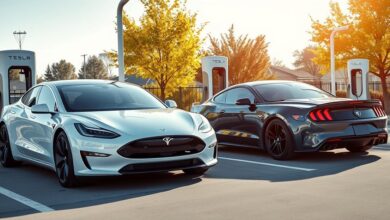
Access to reliable charging is a make‑or‑break factor for family EVs. Tesla’s proprietary Supercharger network remains the most extensive fast‑charging option in the United States, with over 3,000 stations nationwide. Hyundai owners rely on third‑party networks like Electrify America and ChargePoint, which have grown rapidly but can be less consistent in rural areas.
- Install a Level 2 home charger (7.2 kW) for overnight charging—costs range from $500‑$1,200 plus installation.
- Consider a solar‑plus‑storage system to offset charging costs and increase sustainability.
- Check your HOA or apartment complex policies; many now require dedicated EV parking spots.
Future‑Proof Features for Growing Families
As children age, the vehicle’s adaptability becomes crucial. Both the Model Y and Ioniq 6 offer over‑the‑air updates that can add new infotainment apps, improve range estimates, and refine driver‑assist algorithms. Look for features like rear‑seat entertainment screens, Wi‑Fi hotspot capability, and flexible seating configurations that can evolve with your family’s needs.
Comparison of 2024 Tesla Model Y vs Hyundai Ioniq 6
| Model/Option | Starting Price (US$) | EPA Range / MPG Equivalent | Key Feature | Pros | Best For |
|---|---|---|---|---|---|
| Tesla Model Y Long Range | $54,990 | 330 miles | Extensive Supercharger network | Strong performance, spacious interior, OTA updates | Tech‑savvy families needing flexibility |
| Hyundai Ioniq 6 RWD | $45,000 | 340 miles | Best‑in‑class aerodynamics | Lower price, higher efficiency, comfortable ride | Budget‑conscious families prioritizing range |
| Tesla Model Y Performance | $58,990 | 303 miles | Sport‑tuned suspension | Quick acceleration, premium interior options | Families who love spirited driving |
| Hyundai Ioniq 6 AWD | $48,500 | 310 miles | Fast‑charging up to 220 kW | All‑weather capability, sleek design | Families in colder climates needing AWD |
Which Family EV Wins the Verdict?
Both the 2024 Tesla Model Y and Hyundai Ioniq 6 excel in different arenas. If your family values a larger cargo area, a more established fast‑charging network, and a suite of advanced driver‑assist features that evolve quickly, the Model Y edges ahead. However, the Ioniq 6 offers a more affordable entry point, superior aerodynamic efficiency, and a quieter cabin—attributes that appeal to families focused on long‑distance comfort and lower total cost of ownership.
Ultimately, the “winner” depends on your household’s priorities: budget, charging convenience, or interior space. Test‑drive both models, calculate your expected annual mileage, and compare the total cost of ownership over five years. By aligning those numbers with your family’s lifestyle, you’ll make a confident choice that keeps everyone smiling on the road.
Frequently Asked Questions
Is it better to lease or buy a family EV?
Leasing can lower monthly payments and let you upgrade to newer technology every three years, which is attractive for families who want the latest safety features. Buying, especially with a low‑interest loan, reduces long‑term costs and avoids mileage penalties. Consider your expected mileage, how long you plan to keep the vehicle, and whether you value flexibility over equity.
What range should a family need for daily use?
Most families drive between 30‑50 miles per day. A vehicle with at least 200 miles of EPA‑rated range provides a comfortable buffer for errands, school runs, and occasional road trips without frequent charging.
How important is the charging network for a family EV?
Very important. Access to reliable fast chargers reduces travel anxiety on long trips. Tesla’s Supercharger network remains the most extensive, but third‑party networks are catching up. Home charging is essential; a Level 2 charger can fully replenish a family EV overnight.
Are federal tax credits still available for 2024 EVs?
Yes, many 2024 models qualify for up to $7,500 in federal tax credits, but eligibility depends on the manufacturer’s sales volume and your personal tax situation. State and local incentives can add additional savings.
Which safety features are must‑haves for families?
Look for automatic emergency braking, lane‑keeping assist, blind‑spot monitoring, rear‑cross‑traffic alert, and a robust child‑seat anchor system (LATCH). Both the Model Y and Ioniq 6 meet these criteria, but Tesla’s FSD suite offers more advanced (though still beta) capabilities.