
Why the Family EV Segment Is Booming
The automotive world is in the middle of a quiet revolution, and families are at the forefront of the change. As governments tighten emissions standards and charging infrastructure expands, the family EV has become more than a niche offering—it’s a practical solution for daily school runs, weekend getaways, and everything in between. Parents are no longer forced to choose between eco‑friendliness and practicality; modern electric crossovers now deliver space, safety, and technology that rival their gasoline‑powered cousins. In this article we break down the 2024 Tesla Model Y and Hyundai Ioniq 6 to see which model truly earns the badge of the best family EV for today’s households.
Key Buying Criteria for a Family EV
Before diving into model specifics, it helps to establish a checklist that every family should run through when evaluating an electric vehicle. The criteria below reflect the real‑world demands of a household that needs to juggle kids, gear, and a budget.
Space and Seating
- Three‑row versus two‑row layouts – how many passengers can you comfortably fit?
- Cargo capacity with seats up and down – essential for strollers, sports equipment, or groceries.
- Flexible interior configurations – split‑folding seats, flat‑load floors, and easy‑access rear doors.
Range and Efficiency
- EPA‑rated electric range that comfortably exceeds your typical weekly mileage plus a safety buffer.
- Real‑world efficiency (MPGe) in city traffic versus highway cruising.
- Availability of fast‑charging stations along your most common routes.
Safety and Technology
- Crash‑test ratings from NHTSA and IIHS, especially for child‑seat anchor points (LATCH).
- Advanced driver‑assistance systems (ADAS) that reduce fatigue on long family trips.
- Infotainment features that keep kids entertained without distracting the driver.
2024 Tesla Model Y: What It Brings to the Table
The Tesla Model Y has been a bestseller since its launch, and the 2024 refresh adds subtle styling tweaks and a modest bump in range. For families, the Model Y offers a compelling mix of space, performance, and a robust Supercharger network.
Interior Space and Practicality
The Model Y seats up to seven with an optional third row, though the rear seats are best suited for children or occasional adult use. The second‑row benches slide forward for extra cargo room, and the flat floor—thanks to the under‑floor battery pack—means there’s no intruding transmission tunnel. With all seats up, you still get about 68 cubic feet of cargo space, expanding to over 80 cubic feet when the rear seats fold flat.
Range, Charging, and Efficiency
The Long‑Range AWD version now claims an EPA‑rated 330 miles on a single charge, while the Standard Range rear‑wheel‑drive model offers 275 miles. Tesla’s integrated navigation system automatically routes you through Supercharger stations, and the company’s 250 kW V3 chargers can add roughly 200 miles in 15 minutes—ideal for quick pit stops on a family road trip.
Safety Suite and Family‑Friendly Tech
- Tesla’s “Full Self‑Driving” (FSD) beta (optional) provides lane‑keeping, traffic‑aware cruise, and automatic lane changes—features that can reduce driver workload on long journeys.
- Eight airbags, a rigid body structure, and a 5‑star NHTSA rating make the Model Y a safe choice for kids.
- The 15‑inch touchscreen controls climate zones, media, and rear‑seat entertainment, while the optional rear‑seat USB‑C ports keep tablets charged.
Cost of Ownership
Base price for the 2024 Model Y starts at $49,990 for the Standard Range, with the Long‑Range version at $54,990. Federal tax credits of up to $7,500 may apply, depending on your state. Maintenance costs are low—no oil changes, fewer moving parts, and over‑the‑air updates that keep the vehicle current without dealer visits.
2024 Hyundai Ioniq 6: A Closer Look
Hyundai’s Ioniq 6 is the company’s sleek, fastback‑styled sedan that aims to combine aerodynamic efficiency with family‑oriented practicality. While it’s not a traditional SUV, the Ioniq 6’s interior space and cargo versatility make it a serious contender for families seeking a stylish yet functional EV.
Interior Space and Practicality
The Ioniq 6 seats five adults comfortably, with generous rear‑legroom thanks to its long wheelbase. The trunk offers 27.5 cubic feet of space, and the rear seats fold in a 60/40 split to accommodate larger items like bicycles or luggage. Hyundai’s “Flex‑Seat” system includes a sliding rear seat cushion for extra legroom, a feature families appreciate on longer trips.
Range, Charging, and Efficiency
Two battery options are offered: a 53 kWh pack delivering up to 260 miles, and a 77.4 kWh pack that reaches an EPA‑rated 340 miles. The larger pack supports 240 kW DC fast charging, adding roughly 80 miles in 10 minutes. Hyundai’s partnership with Electrify America ensures a growing network of high‑speed chargers across the U.S.
Safety Suite and Family‑Friendly Tech
- Hyundai’s “SmartSense” suite includes Highway Driving Assist 2.0, Blind‑Spot Collision‑Avoidance Assist, and Remote Smart Parking Assist.
- The vehicle earned a Top Safety Pick+ from IIHS and a 5‑star NHTSA rating, with child‑seat anchor points in both the second and third rows.
- Dual 12.3‑inch digital displays present driver‑focused data while the rear passengers enjoy an optional 10.25‑inch infotainment screen with Android Auto and Apple CarPlay.
Cost of Ownership
The base Ioniq 6 with the 53 kWh battery starts at $44,995, while the long‑range version begins at $49,995. Federal tax incentives of up to $7,500 are also available, and Hyundai offers a 5‑year/60,000‑mile battery warranty—one of the most generous in the industry. Routine service intervals are similar to the Model Y, with fewer moving parts and lower long‑term maintenance expenses.
Head‑to‑Head Comparison: Model Y vs Ioniq 6
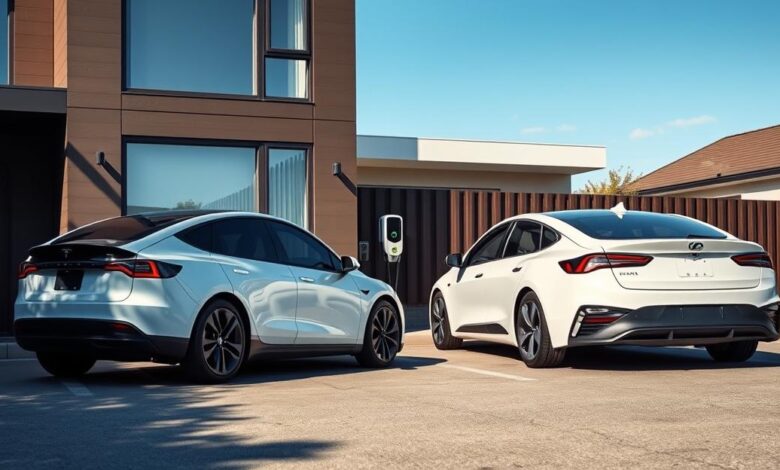
Both the Tesla Model Y and Hyundai Ioniq 6 excel in different areas. Below is a side‑by‑side look at the specs that matter most to families.
Comparison of Core Specs
| Feature | Tesla Model Y (2024) | Hyundai Ioniq 6 (2024) |
|---|---|---|
| Starting Price (USD) | $49,990 | $44,995 |
| Seating Capacity | 5‑7 (optional third row) | 5 |
| EPA Range | 275‑330 miles | 260‑340 miles |
| Fast‑Charging Speed | Up to 250 kW (V3 Supercharger) | Up to 240 kW (Electrify America) |
| Cargo Space (seats up) | 68 cu ft | 27.5 cu ft |
| Warranty (Battery) | 8‑year/120,000 mi | 5‑year/60,000 mi |
| Key Family Feature | Optional third‑row seats, large cargo area | Spacious rear legroom, flexible 60/40 split seat |
| Safety Rating | 5‑star NHTSA | 5‑star NHTSA, IIHS Top Safety Pick+ |
Cost of Ownership: Financing, Incentives, and Real‑World Expenses
Beyond sticker price, families need to understand the total cost of ownership (TCO) over a typical five‑year horizon. Below are the primary cost drivers for each model.
Financing vs. Leasing
- Leasing: Lower monthly payments, often includes maintenance packages, but mileage caps (typically 10,000‑15,000 mi/yr) can be restrictive for active families.
- Financing: Higher monthly outlay but builds equity; ideal for families who plan to keep the EV for 7‑10 years and benefit from the long‑term savings on fuel.
Federal and State Incentives
Both vehicles qualify for the federal EV tax credit of up to $7,500, subject to phase‑out thresholds. Many states add additional rebates—California’s Clean Vehicle Rebate Project (CVRP) offers $2,000 for qualifying EVs, while New York’s Drive Clean Rebate provides up to $2,000.
Fuel Savings and Maintenance
- Average electricity cost of $0.13/kWh translates to roughly $4‑$5 per 100 mi, compared with $12‑$15 for gasoline on a comparable gas‑powered SUV.
- EVs have fewer moving parts—no oil changes, spark plugs, or timing belts—resulting in an estimated $500‑$800 annual maintenance saving.
Depreciation
Historically, Teslas have held value better than most EVs, with resale values retaining about 60‑65% after five years. Hyundai’s newer EV line is expected to depreciate slightly faster, around 55% after five years, but the generous warranty can offset resale concerns.
Which Family EV Wins for Your Household?
Choosing the right family EV boils down to how you prioritize space, range, and technology. If you need a vehicle that can occasionally carry extra passengers and you value a massive charging network, the Tesla Model Y stands out. Its optional third row, larger cargo volume, and industry‑leading Supercharger ecosystem make it a practical choice for larger families or those who frequently travel long distances.
Conversely, if you prefer a sedan with sleek styling, a longer warranty on the battery, and a slightly higher maximum range, the Hyundai Ioniq 6 offers a compelling package. Its interior is quieter, the ride is more car‑like, and the lower starting price gives families a better entry point while still delivering ample space for five passengers and a respectable trunk.
Ultimately, both models qualify as excellent family EV options. Your decision should reflect your daily driving habits, the importance you place on third‑row seating, and whether you prioritize a larger cargo area or a more refined sedan experience. Test drive both, compare financing offers, and factor in local incentives to arrive at the most cost‑effective, enjoyable solution for your family’s electric future.
Frequently Asked Questions
Is it better to lease or buy a family EV?
Leasing offers lower monthly payments and often includes maintenance, but mileage limits can be problematic for families who drive a lot. Buying builds equity and allows you to keep the vehicle beyond the loan term, maximizing long‑term savings on fuel and maintenance. For most families, financing