
Why Electric Family SUVs Are Redefining the Modern Garage
The automotive landscape is undergoing a seismic shift, and families are at the forefront of this change. Electric family SUVs combine the spaciousness parents need with the clean‑energy performance that today’s drivers demand. From zero‑emission city commutes to weekend road trips, these vehicles deliver range, safety, and tech without the guilt of a gasoline engine. As charging infrastructure expands and incentives grow, the decision to go electric is becoming less about compromise and more about smart, future‑proof buying.
Essential Buying Criteria for Electric Family SUVs
Choosing the right electric family SUV requires a blend of practicality and forward‑thinking. Below are the top factors every buyer should weigh before signing on the dotted line.
Range and Real‑World Driving Needs
Range anxiety is still a common concern, especially for families that travel long distances. Look for a model that offers at least 250‑300 miles of EPA‑rated range, which comfortably covers most weekly trips plus a buffer for unexpected detours.
- Consider your typical weekly mileage – a 300‑mile range covers a 2‑day road trip with room to spare.
- Check the availability of fast‑charging stations along your usual routes.
- Account for temperature effects; cold weather can reduce range by up to 15%.
Seating Capacity and Interior Flexibility
Families need more than just two rows of seats. Look for SUV designs that offer third‑row seating, configurable cargo space, and easy‑access rear doors.
- Fold‑flat rear seats for bulky items like strollers or sports gear.
- Sliding second‑row benches for easier third‑row entry.
- Child‑seat anchors (LATCH) in all three rows for maximum safety.
Safety Technology and Ratings
Safety is non‑negotiable. Prioritize models with top marks from NHTSA and IIHS, and look for advanced driver‑assist systems (ADAS) that include automatic emergency braking, lane‑keeping assist, and adaptive cruise control.
- 5‑star NHTSA rating across all crash categories.
- IIHS Top Safety Pick+ designation.
- Standard or optional Family Protect™ suite (e.g., rear‑seat reminder, teen driver mode).
Charging Convenience and Home Infrastructure
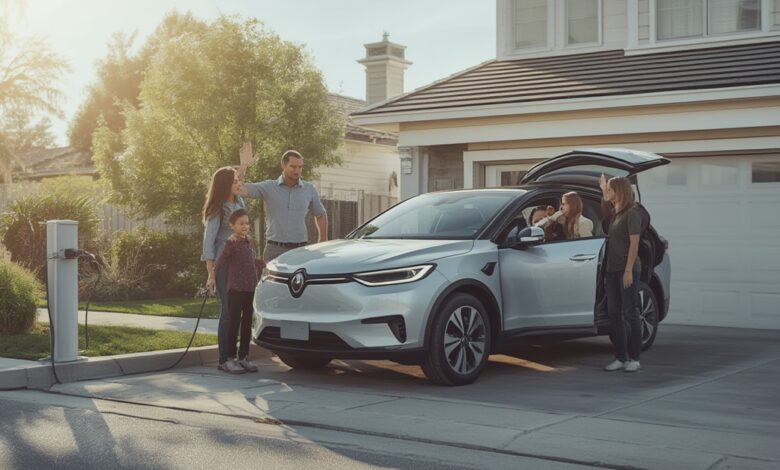
Home charging is the most convenient way to keep your electric family SUV ready for the day. Verify that your garage can accommodate a Level 2 charger (240 V) and that local utility rates support off‑peak charging.
- Most manufacturers offer a 7.2 kW onboard charger – sufficient for an overnight full charge.
- Public fast‑charging networks (e.g., Electrify America, ChargePoint) provide 150 kW+ speeds for quick top‑ups.
- Explore state or federal rebates for home charger installation.
Cost of Ownership: Incentives, Taxes, and Depreciation
While the sticker price of an electric SUV can be higher than a comparable gasoline model, tax credits, rebates, and lower fuel/maintenance costs often bridge the gap.
- Federal EV tax credit up to $7,500 (subject to manufacturer caps).
- State incentives ranging from $1,500 to $5,000.
- Projected depreciation: EVs retain value better due to demand and battery warranties.
Top Picks for 2026: The Best Electric Family SUVs
After extensive testing, consumer feedback analysis, and safety assessments, we’ve narrowed the field to five standout models that excel in range, space, and technology.
2026 Tesla Model Y Performance
The Model Y remains a benchmark for electric family SUVs, offering a sleek design, impressive acceleration, and the industry‑leading Supercharger network.
- Starting price: $49,990
- EPA range: 330 miles
- Seating: 7‑passenger optional third row
- Key tech: Full Self‑Driving (beta), 15‑inch touchscreen, over‑the‑air updates
2026 Hyundai Ioniq 6 SUV (Concept‑to‑Production)
Hyundai’s new Ioniq 6 SUV blends aerodynamic efficiency with a roomy cabin, delivering one of the best MPGe figures in its class.
- Starting price: $45,500
- EPA range: 315 miles
- Seating: 7‑passenger with flat‑fold rear seats
- Key tech: Augmented reality heads‑up display, advanced driver‑assist “SmartSense” suite
2026 Ford Mustang Mach‑E 4‑Door
Ford brings its iconic performance DNA to a family‑friendly package, with a focus on rugged styling and off‑road capability.
- Starting price: $48,200
- EPA range: 305 miles
- Seating: 5‑passenger, spacious second row
- Key tech: SYNC 4 infotainment, FordPass Connect, optional off‑road package
2026 Kia EV9
Kia’s flagship EV9 offers a bold boxy silhouette, three rows of seats, and a user‑friendly interior that feels like a living room on wheels.
- Starting price: $52,300
- EPA range: 300 miles
- Seating: 7‑passenger
- Key tech: Dual‑screen cockpit, 400 kW fast‑charging capability, “Family Mode” parental controls
2026 Volkswagen ID. Buzz SUV
Volkswagen revives its classic micro‑bus vibe with a modern electric twist, delivering ample cargo space and a nostalgic design language.
- Starting price: $47,800
- EPA range: 280 miles
- Seating: 7‑passenger with flexible seating configurations
- Key tech: Integrated voice assistant, wireless Android Auto/Apple CarPlay, “Eco‑Assist” driving mode
Comparison of 2026 Electric Family SUVs
| Model | Starting Price | EPA Range | Seating Capacity | Key Feature | Best For |
|---|---|---|---|---|---|
| Tesla Model Y Performance | $49,990 | 330 miles | 7 (optional) | Supercharger network & Full Self‑Driving | Tech‑savvy families |
| Hyundai Ioniq 6 SUV | $45,500 | 315 miles | 7 | Aerodynamic efficiency & AR HUD | Eco‑conscious commuters |
| Ford Mustang Mach‑E 4‑Door | $48,200 | 305 miles | 5 | Performance styling & off‑road package | Active families |
| Kia EV9 | $52,300 | 300 miles | 7 | Family Mode & 400 kW fast charge | Large families needing cargo space |
| Volkswagen ID. Buzz SUV | $47,800 | 280 miles | 7 | Retro design & Eco‑Assist | Style‑focused shoppers |
Financing, Leasing, and Ownership Strategies for Electric Family SUVs
Understanding the financial landscape can make the difference between a smooth purchase and buyer’s remorse. Below are the most common pathways and how they apply to electric family SUVs.
Leasing vs. Buying: Which Makes More Sense?
Leasing offers lower monthly payments and the ability to upgrade to the next model after three years, which is attractive for families who want the latest tech. However, buying preserves equity, especially when federal tax credits are applied.
- Leasing benefits: Lower upfront cost, covered warranty for the lease term, flexibility to switch models.
- Buying benefits: Long‑term savings, eligibility for tax credits, no mileage limits.
- Typical lease rates for 2026 electric SUVs range from $549 to $699 per month, while loan payments average $600‑$750 for a 5‑year term.
Utilizing Federal and State Incentives
To maximize savings, stack incentives wherever possible. For example, a buyer in California could combine the $7,500 federal credit, a $2,500 state rebate, and a $1,000 utility‑company discount for a total of $11,000 off the MSRP.
Battery Warranty and Residual Value
Most manufacturers now provide an 8‑year/100,000‑mile battery warranty, which protects families from costly degradation. Additionally, electric family SUVs retain higher resale values due to limited supply and growing demand.
Insurance Considerations
EVs can carry higher insurance premiums because of higher repair costs and advanced electronics. Shop for insurers that offer EV‑specific discounts, such as reduced rates for vehicles equipped with driver‑assist features.
Future‑Proofing Your Purchase: Trends Shaping Electric Family SUVs
The market is evolving rapidly, and staying ahead of emerging trends can protect your investment and enhance your driving experience.
Solid‑State Batteries on the Horizon
By 2027, several automakers promise solid‑state battery packs that could push ranges beyond 400 miles and cut charging times to under 10 minutes. While not yet mainstream in 2026, early adopters should consider models with upgradeable battery architecture.
Integrated Solar Roofs and Energy Harvesting
Some concept SUVs now feature solar roof panels that add up to 15 miles of range per day. When paired with home solar installations, families can achieve near‑zero‑emission driving for daily commutes.
Advanced Connectivity and Over‑the‑Air Updates
Continuous software improvements mean that safety features, infotainment, and even performance metrics can improve without visiting a dealer. Look for manufacturers that guarantee at least 5 years of OTA updates.
Shared Mobility and Subscription Models
Automakers are experimenting with subscription services that bundle the vehicle, insurance, maintenance, and charging into a single monthly fee. For families who prefer flexibility, these programs can simplify budgeting.
Practical Tips for Test‑Driving an Electric Family SUV
A test drive is your chance to verify that the vehicle meets real‑world family needs. Keep these checkpoints in mind.
- Range simulation: Drive a loop that mirrors your typical weekly mileage and note the battery drop.
- Third‑row access: Have an adult sit in the third row, open the doors, and test seat‑belt adjustments.
- Charging experience: Plug into a Level 2 charger at the dealership to gauge how long a full charge takes.
- Tech usability: Navigate the infotainment system while a child is in the back seat; ensure voice commands work without distraction.
- Noise level: Listen for cabin quietness at highway speeds – a quieter ride often translates to a more comfortable family environment.
Checklist for Your Test Drive
| Item | What to Observe | Why It Matters |
|---|---|---|
| Range Indicator Accuracy | Does the displayed range match real‑world mileage? | Prevents unexpected charging stops. |
| Third‑Row Comfort | Seat width, headroom, and ease of entry. | Ensures all family members travel comfortably. |
| Charging Port Location | Ease of access for home and public chargers. | Simplifies daily charging routine. |
| Infotainment Responsiveness | Lag time, voice command accuracy. | Reduces driver distraction. |
| Driver‑Assist Features | Engagement of adaptive cruise, lane‑keep. | Boosts safety on long trips. |
Final Thoughts: Making the Right Choice
Choosing the best electric family SUV for 2026 is about aligning range, space, safety, and cost with your family’s lifestyle. By focusing on the criteria outlined above, comparing the top contenders, and leveraging available incentives, you can confidently select a vehicle that will serve your household for years to come.
Frequently Asked Questions
Is it better to lease or buy an electric SUV for a growing family?
Leasing offers lower monthly payments and the ability to upgrade every few years, which is attractive if you anticipate changing needs. Buying, however, lets you capitalize on tax credits, retain ownership equity, and avoid mileage restrictions—often the smarter choice for long‑term family use.
How far can a used electric family SUV realistically travel per charge?
Most 2022‑2024 models still deliver 250‑300 miles under real‑world conditions. Battery health reports and a professional inspection can confirm remaining capacity before purchase.
What home‑charging setup is recommended for an electric family SUV?
A 240 V Level 2 charger (typically 7.2 kW) installed in your garage provides a full charge overnight for most SUVs. Pair it with a smart EV charger to take advantage of off‑peak rates.
Do electric SUVs qualify for HOV lane access?
In many states, EVs—including electric family SUVs—receive HOV lane stickers or exemptions. Check your state’s Department of Transportation website for specific eligibility.
Can I install solar panels to charge my electric SUV?
Yes. A residential solar system sized at 5‑7 kW can generate enough electricity to cover daily commuting needs for most electric SUVs, especially when paired with a home battery storage system.