
Why EV Battery Health Matters
The electric vehicle (EV) revolution is reshaping the automotive landscape, and with it comes a new set of responsibilities for owners. Keeping your ev battery in top condition isn’t just about extending range—it directly impacts resale value, warranty compliance, and the overall driving experience. A well‑maintained battery can deliver consistent performance for years, while neglect can lead to capacity loss, reduced efficiency, and costly replacements. Understanding the fundamentals of battery care now will pay dividends as you cruise toward a greener future.
Understanding How an ev Battery Works
Before you can protect your battery, you need to know what you’re protecting. Modern EVs rely on lithium‑ion packs composed of thousands of tiny cells, each storing and releasing energy through controlled chemical reactions. These packs are managed by sophisticated Battery Management Systems (BMS) that monitor voltage, temperature, and state‑of‑charge (SOC) to keep everything within safe limits.
Cell Chemistry and Energy Density
Most passenger EVs use NCA (nickel‑cobalt‑aluminum) or NMC (nickel‑manganese‑cobalt) chemistries, balancing energy density with longevity. Higher energy density means more range, but it can also make cells more sensitive to extreme temperatures and fast charging. Knowing the chemistry of your vehicle helps you tailor your charging and storage habits accordingly.
Thermal Management Systems
Thermal management is the unsung hero of battery longevity. Active cooling (liquid or air) and heating systems maintain the pack within an optimal temperature window—usually between 20 °C and 30 °C (68 °F–86 °F). When the BMS detects temperatures outside this range, it may limit power output or slow charging to protect the cells.
Key Practices to Preserve Your ev Battery
Adopting a few disciplined habits can dramatically slow degradation and keep your EV humming along for the long haul.
Smart Charging Habits
- Charge to 80 % for daily driving; reserve 100 % only for long trips.
- Avoid letting the battery drop below 20 % unless necessary.
- Use Level 2 (220 V) home chargers for regular top‑ups; limit use of DC fast chargers to occasional boosts.
- Schedule charging during off‑peak hours to reduce grid strain and keep the BMS cooler.
Temperature Control
- Park in shade or a garage whenever possible to avoid extreme heat.
- If you live in a cold climate, pre‑condition the cabin while the car is still plugged in.
- Never expose the vehicle to direct sunlight for prolonged periods, especially when the battery is near full charge.
Driving Style Adjustments
- Gentle acceleration and regenerative braking reduce stress on the cells.
- Maintain moderate speeds on highways; high‑speed cruising generates more heat.
- Use eco or efficiency driving modes when available.
Long‑Term Storage Tips
- If storing for more than a month, keep the SOC around 50 % and disconnect the charger.
- Check the battery level every 2–3 weeks and top up to maintain the 40‑60 % window.
- Store the vehicle in a temperature‑stable environment, ideally between 10 °C and 25 °C (50 °F–77 °F).
Charging Strategies: Home vs. Public, Fast vs. Slow
Choosing the right charging approach is a balancing act between convenience, cost, and battery health. Below is a quick comparison of the most common charging options.
Comparison of Charging Options
| Charging Option | Typical Power (kW) | Time to 80 % (from 20 %) | Impact on ev Battery | Best For |
|---|---|---|---|---|
| Level 1 (120 V household outlet) | 1.4 | ≈30 hours | Very gentle; minimal degradation | Overnight charging at home |
| Level 2 (220 V home or public) | 7.2–11 | ≈4–6 hours | Low‑moderate stress; safe for daily use | Daily commuting, residential parking |
| DC Fast Charger (CHAdeMO/CCS) | 50–250 | ≈30–45 minutes | Higher heat generation; occasional use recommended | Long trips, quick top‑ups |
| Tesla Supercharger (V3) | 250 | ≈20 minutes | Similar to other fast chargers; BMS mitigates risk | Highway travel, rapid recharging |
While fast chargers are a lifesaver on road trips, frequent use can accelerate thermal cycling, which over time reduces capacity. For everyday needs, Level 2 home charging strikes the ideal balance of speed and battery preservation.
Long‑Term Maintenance Checklist
Keeping a routine maintenance schedule helps you catch early signs of battery wear and ensures the supporting systems stay in peak condition.
- Monthly: Verify charging cable integrity, check for loose connections, and glance at the BMS dashboard for any warnings.
- Quarterly: Run a full charge‑discharge cycle (20 % → 80 %) to recalibrate the BMS if you notice range discrepancies.
- Bi‑annually: Inspect tire pressure and alignment; uneven wear can affect regenerative braking efficiency.
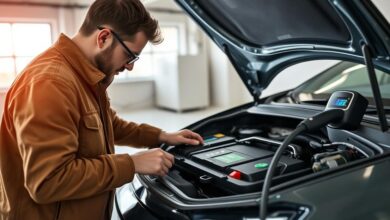
- Annually: Schedule a professional battery health check—most dealers offer a diagnostic that measures internal resistance and capacity loss.
- Every 2‑3 years: Update the vehicle’s firmware; manufacturers often release BMS tweaks that improve longevity.
When to Seek Professional Help
Even the most diligent owner may encounter battery issues that require expert attention. Look for these warning signs:
- Sudden drop in estimated range greater than 10 % after a software update.
- Frequent BMS alerts about overheating or over‑voltage.
- Noticeable imbalance where one side of the pack depletes faster.
- Unusual noises or smells from the battery compartment.
If any of these symptoms appear, schedule a service appointment promptly. Early intervention can often salvage a failing pack or, at the very least, prevent safety hazards.
FAQ
Is it better to charge my EV to 100 % for daily driving?
No. Charging to 100 % regularly increases voltage stress and accelerates degradation. Reserve a full charge for long trips and aim for 80 % during everyday use.
How often should I use a DC fast charger?
Limit fast charging to once a week or less if possible. Occasional use is fine, but daily reliance can generate excess heat, which shortens battery life.
Can I store my EV with the battery at 0 %?
Never. Storing a battery at 0 % can cause irreversible cell damage. Keep the state‑of‑charge between 40 % and 60 % for long‑term storage.
What is the typical lifespan of an ev battery?
Most modern lithium‑ion packs retain 70‑80 % of their original capacity after 8‑10 years or 100,000–150,000 miles, whichever comes first. Proper care can push these numbers higher.
Will extreme cold affect my battery’s performance?
Yes. Cold temperatures increase internal resistance, reducing range and charging speed. Pre‑conditioning while plugged in mitigates most of the impact.