Best Electric Cars for Families in 2026 That Combine Safety, Space, and Savings

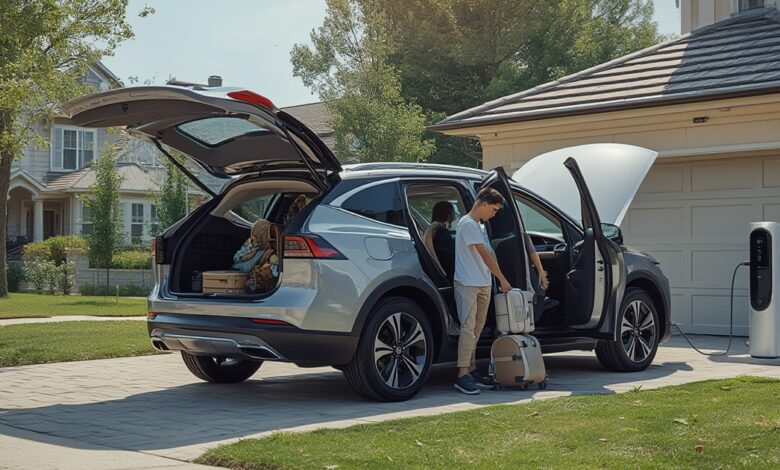
The automotive landscape has transformed dramatically, and families across America are discovering that electric cars offer more than just environmental benefits. Today’s family-focused EVs deliver spacious interiors that rival traditional SUVs, advanced safety systems that protect precious cargo, and long-term savings that free up household budgets for what truly matters. With federal tax credits, lower maintenance costs, and rapidly expanding charging networks, 2026 marks a pivotal year where electric vehicles have become the smart choice for parents seeking practicality without compromise. Whether you’re shuttling kids to soccer practice or embarking on cross-country road trips, the latest generation of family electric vehicles combines the space you need, the safety you demand, and the savings you deserve.
Why Electric Cars Make Sense for Families in 2026
The decision to switch to an electric vehicle represents more than an environmental statement—it’s a strategic financial and lifestyle choice. Modern families face rising costs across housing, education, and healthcare, making vehicle operating expenses a significant budget consideration.
Electric vehicles eliminate the volatile fuel costs that have plagued family budgets for decades. With electricity rates remaining relatively stable and predictable, parents can accurately forecast monthly transportation expenses. The average American family drives approximately 12,000 to 15,000 miles annually, and charging an EV at home costs roughly one-third of what gasoline would cost for equivalent mileage.
Maintenance requirements drop dramatically with electric powertrains. There are no oil changes, transmission services, spark plug replacements, or exhaust system repairs. Brake pads last significantly longer thanks to regenerative braking systems that recapture energy. Over a typical seven-year ownership period, families can save $4,500 to $6,000 in maintenance costs alone.
Federal tax credits of up to $7,500 remain available for qualifying new electric vehicles in 2026, with additional state and local incentives potentially adding thousands more. Many utility companies offer special EV charging rates or rebates for installing home charging equipment, further reducing the total cost of ownership.
Key Features to Look for in Family Electric Vehicles
Interior Space and Seating Configurations
Family life demands versatility. The best electric cars for families offer flexible seating arrangements that accommodate car seats, growing teenagers, and everything in between. Look for vehicles with three-row seating options if you have more than two children or frequently transport extra passengers.
Cargo capacity becomes critical when you’re hauling sports equipment, strollers, groceries, and luggage. Many electric SUVs and crossovers provide 30 to 85 cubic feet of cargo space with seats folded. The absence of a traditional transmission tunnel often creates more usable interior room and flat load floors.
- Check for LATCH system accessibility for car seat installation
- Verify adequate legroom in second and third rows for comfortable long-distance travel
- Consider vehicles with power-folding seats for easier cargo management
- Look for underfloor storage compartments where the engine would traditionally be located
- Evaluate door opening angles and step-in height for elderly passengers or small children
Range and Battery Performance
Range anxiety has become less relevant as battery technology advances, but families should still evaluate their actual driving needs honestly. Most family electric vehicles now offer 250 to 350 miles of EPA-estimated range, which covers the vast majority of daily driving scenarios.
Consider your longest regular trip—whether that’s a weekend visit to grandparents or a vacation destination. Modern EVs with 300-plus miles of range can handle most family road trips with strategic charging stops that coincide naturally with meal and rest breaks.
Battery warranties have become increasingly generous, with most manufacturers offering 8-year/100,000-mile coverage as standard. Some luxury brands extend this to 10 years or unlimited mileage, providing peace of mind that the most expensive component is protected throughout your ownership.
Technology and Connectivity
Today’s families live digitally connected lives, and vehicles should support that lifestyle. Look for integrated systems that offer smartphone connectivity, multiple USB charging ports throughout the cabin, and rear-seat entertainment options for longer journeys.
Advanced driver assistance systems (ADAS) have become standard features across most electric vehicles. These technologies include adaptive cruise control, lane-keeping assistance, automatic emergency braking, and blind-spot monitoring—all contributing to safer family transportation.
Top Electric Cars for Families in 2026
The market has expanded dramatically, giving families genuine choice across price points and vehicle sizes. From compact crossovers perfect for urban families to spacious three-row SUVs ready for adventure, electric options now compete directly with traditional family vehicles in every category.
Comparison of Best Family Electric Vehicles in 2026
| Model | Starting Price | EPA Range | Seating Capacity | Cargo Space | Key Family Feature | Best For |
|---|---|---|---|---|---|---|
| Kia EV9 | $56,395 | 304 miles | 6-7 passengers | 81.7 cu ft | Three-row seating with excellent warranty | Growing families needing maximum space |
| Tesla Model Y | $44,990 | 310 miles | 5-7 passengers | 76 cu ft | Supercharger network and advanced autopilot | Tech-focused families who road trip frequently |
| Hyundai IONIQ 5 | $43,975 | 303 miles | 5 passengers | 59.3 cu ft | Ultra-fast 800V charging architecture | Smaller families prioritizing quick charging |
| Volkswagen ID.4 | $38,995 | 275 miles | 5 passengers | 64.2 cu ft | Affordable with excellent build quality | Budget-conscious families entering EV market |
| Rivian R1S | $75,900 | 321 miles | 7 passengers | 88 cu ft | Adventure-ready with off-road capability | Outdoor-loving families seeking versatility |
| Ford Mustang Mach-E | $42,995 | 312 miles | 5 passengers | 59.7 cu ft | Ford’s charging network and dealer support | Families wanting established brand reliability |
Detailed Family-Focused Analysis
The Kia EV9 stands out as the most practical choice for larger families who need genuine three-row seating. Unlike some competitors where the third row feels like an afterthought, the EV9 provides comfortable accommodations for adults in all three rows. Its 10-year/100,000-mile warranty demonstrates Kia’s confidence in long-term reliability, which matters enormously for families planning to keep vehicles through multiple childhood stages.
Tesla’s Model Y continues dominating sales charts because it solves the road trip equation better than competitors. The extensive Supercharger network means families can travel coast-to-coast with confidence, finding reliable fast charging at intervals that match natural break schedules. The optional third-row seats work best for smaller children but expand the vehicle’s versatility significantly.
For families prioritizing value without sacrificing capability, the Volkswagen ID.4 delivers exceptional bang for the buck. Its spacious interior, solid build quality, and competitive range make it an excellent first EV for families transitioning from traditional SUVs. The straightforward controls and conventional SUV proportions help ease the learning curve for drivers new to electric vehicles.
Safety Ratings and Child-Friendly Features
Safety remains the paramount concern for family vehicle purchases. Electric vehicles bring inherent safety advantages through their low center of gravity—heavy battery packs mounted in the floor reduce rollover risk compared to traditional SUVs. Crumple zones benefit from the absence of bulky engine blocks, allowing engineers to design more effective energy-absorbing structures.
The Insurance Institute for Highway Safety (IIHS) and National Highway Traffic Safety Administration (NHTSA) have recognized multiple electric vehicles with top safety ratings. Most family-focused EVs achieve five-star overall ratings from NHTSA and Top Safety Pick designations from IIHS.
Advanced Safety Technologies Standard in 2026
- Automatic Emergency Braking with Pedestrian Detection: Systems now recognize cyclists, pedestrians, and even animals, applying brakes automatically when collisions appear imminent
- Rear Cross-Traffic Alert: Essential when backing out of parking spaces with limited visibility, especially in busy school pickup zones
- 360-Degree Camera Systems: Multiple cameras create bird’s-eye views, making parking and maneuvering safer in tight spaces
- Blind Spot Monitoring: Visual and audible warnings prevent lane-change accidents on highways
- Rear Seat Reminder Systems: Alerts that prompt drivers to check rear seats, helping prevent tragic hot car deaths
- Child Safety Locks and Window Lockouts: Enhanced electronic controls prevent accidental door openings or window operations
Many electric vehicles include additional family-friendly safety features like reinforced door beams, side-curtain airbags extending to third rows, and knee airbags for front passengers. The structural rigidity of battery pack enclosures adds significant strength to the vehicle floor, improving side-impact protection.
Parents should verify that any vehicle under consideration accommodates their specific car seat models properly. Not all vehicles work equally well with all car seat designs, and attempting to install car seats during a test drive reveals potential compatibility issues before purchase.
Cost Analysis: Understanding Total Ownership Savings
Electric vehicle economics extend far beyond the window sticker. Savvy families calculate total cost of ownership over their expected ownership period—typically five to seven years—to understand true financial impact.
Initial Purchase and Incentives
While electric vehicles often carry higher MSRPs than comparable gasoline models, federal tax credits immediately reduce that gap. The $7,500 federal credit applies at point of sale for many models in 2026, eliminating the previous requirement to wait until tax filing. Income restrictions do apply, with credits phasing out for joint filers earning above $300,000 annually.
State incentives vary dramatically. California offers up to $7,500 in additional rebates, while states like Colorado, New York, and Massachusetts provide $2,500 to $5,000. Some municipalities add local incentives, and utility companies may contribute charging equipment rebates worth $500 to $1,000.
Fuel Cost Comparison
The average American household spends $2,000 to $3,000 annually on gasoline. Electricity costs for equivalent driving typically range from $600 to $900 per year when charging primarily at home during off-peak hours. This generates $1,400 to $2,100 in annual savings, totaling $7,000 to $10,500 over five years.
These calculations assume electricity rates of $0.13 per kWh and gasoline prices around $3.50 per gallon—both conservative estimates. Families with solar panels reduce electricity costs even further, potentially achieving nearly free daily driving.
Maintenance and Repair Savings
Traditional vehicles require regular maintenance that electric powertrains eliminate entirely. Over 100,000 miles of driving, families avoid:
- 20 to 25 oil changes at $50 to $80 each: $1,000 to $2,000 saved
- Transmission services at 30k, 60k, 90k intervals: $600 to $900 saved
- Spark plug replacements: $200 to $400 saved
- Exhaust system repairs: $300 to $800 saved
- Reduced brake pad replacements thanks to regenerative braking: $400 to $600 saved
Conservative estimates put five-year maintenance savings at $3,000 to $5,000 compared to equivalent gasoline vehicles. Add fuel savings, and families recoup higher initial purchase prices within three to four years of ownership.
Insurance Considerations
Insurance premiums for electric vehicles have historically run 10% to 15% higher than comparable gasoline models due to higher repair costs for specialized components. However, this gap has narrowed as insurers recognize EVs’ superior safety ratings and lower accident rates linked to advanced driver assistance systems.
Some insurance companies now offer EV-specific discounts or special policies that reflect lower fire risk and reduced liability from advanced safety features. Shopping across multiple carriers reveals significant rate variations—price differences of 20% to 30% for identical coverage are common.
Charging Infrastructure and Range Considerations for Families
Successful EV ownership for families depends on establishing convenient charging routines. The good news: most families charge primarily at home overnight, waking to a “full tank” each morning without ever visiting gas stations.
Home Charging Setup
Level 2 home charging stations represent the sweet spot for family charging needs. These 240-volt systems deliver 25 to 40 miles of range per hour of charging—more than sufficient to replenish daily driving overnight. Installation costs range from $500 to $1,500 depending on existing electrical panel capacity and garage location.
Many electric vehicles include Level 1 charging cables that plug into standard 120-volt outlets. While these work in emergencies, they’re impractically slow for primary charging, delivering only 3 to 5 miles of range per hour. Families should budget for proper Level 2 installation when purchasing an EV.
Time-of-use utility rates make charging even more economical. Programs offering electricity at $0.05 to $0.08 per kWh during overnight hours reduce “fuel” costs to less than $1 per 100 miles of driving—extraordinary value that gasoline vehicles simply cannot match.
Public Charging Networks
Road trips require access to DC fast charging networks that can add 150 to 200 miles of range in 20 to 30 minutes. Tesla’s Supercharger network remains the gold standard with over 2,000 stations across North America, though it’s now opening to other brands in 2026.
Non-Tesla families can access charging through networks including Electrify America, EVgo, and ChargePoint. Most family electric vehicles now support plug-and-charge technology, automatically billing your account without requiring apps or membership cards—similar convenience to traditional gas stations.
Strategic trip planning using built-in vehicle navigation or apps like A Better Route Planner ensures charging stops align with meal times or rest breaks. Families discover that 20-minute charging stops every 2.5 to 3 hours actually improve road trip experiences by enforcing healthy breaks that reduce driver fatigue.
Real-World Family Scenarios
Daily commutes and school runs rarely challenge modern EV range. A family driving 50 miles daily uses only 15% to 20% of battery capacity in a 300-mile range vehicle, leaving substantial reserves for unexpected errands or activities.
Weekend activities within 100 miles of home remain easily manageable without public charging. Most families find they charge at home exclusively during normal weekly routines, only utilizing public charging during longer vacation travel.
Cold weather does reduce range by 20% to 30% in extreme conditions, but preconditioning the cabin while still plugged in preserves battery charge for driving. Modern thermal management systems maintain battery performance far better than earlier generation vehicles.
Frequently Asked Questions
Are electric cars really cheaper to own than gasoline vehicles for families?
Yes, when calculating total cost of ownership over five to seven years. While purchase prices may be higher initially, federal and state incentives reduce that gap significantly. Combined with fuel savings of $1,500 to $2,000 annually and maintenance savings of $500 to $800 per year, most families achieve cost parity within three to four years. Over a typical seven-year ownership period, families save $10,000 to $15,000 compared to equivalent gasoline SUVs.
How long does it take to charge an electric car at home?
With a Level 2 home charging station (240 volts), most family EVs fully charge from empty in 6 to 10 hours. However, families rarely need full charges—typically you’re adding 30 to 50 miles of range used during daily driving, which takes 1 to 2 hours. Charging overnight means you wake to a full battery every morning without any effort or time spent at gas stations.
What happens if I run out of battery charge on a road trip?
Modern electric vehicles provide multiple low-battery warnings long before you risk running out of charge. Built-in navigation systems automatically route you to nearby charging stations when battery levels drop. If you do completely deplete the battery, roadside assistance (included with most EVs for 3 to 5 years) will either charge your vehicle on-site or tow you to the nearest charging station. However, with proper trip planning using vehicle navigation, running out of charge is exceptionally rare—equivalent to running out of gas in a traditional vehicle.
Are electric vehicles safe in crashes compared to traditional cars?
Electric vehicles typically achieve the highest possible safety ratings from NHTSA and IIHS. The low center of gravity from floor-mounted battery packs reduces rollover risk significantly. Rigid battery enclosures add structural strength to the vehicle floor, improving side-impact protection. The absence of heavy engine blocks in the front allows for larger, more effective crumple zones. Many EVs have lower injury risk ratings than comparable gasoline vehicles across all crash types.
Can I install a car seat safely in an electric vehicle?
Absolutely. Electric vehicles include the same LATCH (Lower Anchors and Tethers for Children) systems as traditional vehicles, allowing secure car seat installation. Many EVs actually offer advantages for families with car seats, including flatter rear floors (no transmission tunnel), easier access through larger door openings, and more second-row legroom. Always verify that your specific car seat model fits properly in any vehicle you’re considering—bring your car seats to test drive appointments to check installation before purchasing.
What about battery replacement costs when the battery degrades?
Battery degradation has proven far less problematic than early concerns suggested. Real-world data shows most EV batteries retain 85% to 90% of original capacity after 100,000 miles. Manufacturers provide 8-year/100,000-mile battery warranties as standard, with many extending to 10 years or unlimited mileage. If replacement ever becomes necessary outside warranty coverage, costs have dropped dramatically—current replacement batteries cost $5,000 to $8,000 installed, and prices continue declining as production scales. For comparison, transmission replacements in traditional vehicles cost $4,000 to $6,000, and engine replacements can exceed $8,000.
Do electric cars work well in cold winter climates?
Yes, though cold weather does impact range. Expect 20% to 30% range reduction in temperatures below 20°F, primarily from cabin heating rather than battery performance. Modern EVs include heat pumps and efficient thermal management systems that minimize this impact. Preconditioning your vehicle while plugged in warms the cabin and battery using home electricity rather than battery charge. Millions of EVs operate successfully in cold climates including Norway (where EVs represent over 80% of new car sales), Canada, and northern U.S. states.
Can I tow a trailer with an electric family vehicle?
Several family-focused electric vehicles offer towing capability. The Rivian R1S can tow up to 7,700 pounds, the Tesla Model X handles 5,000 pounds, and the Kia EV9 tows 5,000 pounds. Towing does significantly reduce range—expect 40% to 50% reduction when towing at maximum capacity. For occasional towing of small trailers or campers, electric vehicles work well. Families who tow frequently or need maximum towing capacity may still prefer traditional powertrains for those specific use cases, though this is rapidly changing as purpose-built electric trucks enter the market.
References and Further Reading
- National Highway Traffic Safety Administration (NHTSA) – Vehicle Safety Ratings Database
- Insurance Institute for Highway Safety (IIHS) – Crash Test Results and Safety Awards
- U.S. Department of Energy – Alternative Fuels Data Center EV Information
- Environmental Protection Agency (EPA) – FuelEconomy.gov EV Comparison Tools
- Consumer Reports – Electric Vehicle Reliability and Ownership Studies
- Kelley Blue Book – EV Pricing and Incentive Information
- PlugShare – Public Charging Station Locations and User Reviews
- Internal Revenue Service – Federal Tax Credits for Electric Vehicles