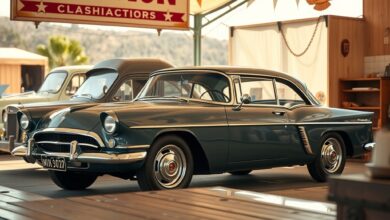


Why Vintage Cars Capture the Imagination of Investors
The allure of vintage cars goes far beyond their glossy paint and nostalgic design. For many enthusiasts, these machines represent a living piece of automotive history, a blend of craftsmanship and cultural significance that modern production cars rarely match. When you hear the phrase “vintage cars,” you instantly picture iconic silhouettes, hand‑stitched leather, and the roar of a classic V8 that turns heads at every turn. As the market tightens and collectors scramble for limited‑edition examples, savvy investors are recognizing that the right vintage car can deliver returns that rival, and sometimes exceed, traditional assets like stocks or real estate. This opening hook sets the stage for a practical guide that helps you spot the most promising models before prices skyrocket.
Key Criteria for Selecting Investment‑Grade Vintage Cars
Not every classic will appreciate in value. Successful collectors apply a disciplined checklist that balances passion with financial prudence. Below are the essential factors to evaluate before committing capital.
Authenticity and Documentation
Proven provenance is the backbone of any vintage car purchase. Look for:
- Original factory build sheets or VIN verification.
- Comprehensive service records that trace every major maintenance event.
- Historical photographs or newspaper articles that link the car to notable events or owners.
A well‑documented vehicle reduces risk of hidden restorations that could diminish its collectible appeal.
Condition and Originality
Buyers typically categorize condition using the HPI or JPP rating scales, ranging from “concours” (pristine, factory‑original) to “project” (requiring extensive work). For investment purposes, aim for:
- Original paint and interior—replacements can lower value unless they are period‑correct.
- Unmodified engine and drivetrain—performance upgrades often deter purists.
- Minimal rust and structural integrity—these affect both safety and resale potential.
Provenance and Historical Significance
A car that once belonged to a racing legend, a celebrity, or that achieved a milestone on the track gains instant cachet. Verify any claimed history through:
- Official race results or championship records.
- Certificates of authenticity from reputable historians.
- Third‑party authentication services such as JPP Classic Car Certification.
Market Liquidity and Demand Trends
Even the most beautiful vintage cars can sit idle if there’s insufficient buyer interest. Monitor auction results, dealer inventories, and online forums to gauge demand. Models that consistently appear in top‑selling lists at major events like Monterey Car Week or Goodwood Festival of Speed are generally safer bets.
Top Vintage Cars Poised for Price Appreciation
The following models have demonstrated strong historical price growth, limited production runs, and a passionate collector base. While each carries its own risk profile, they collectively represent a diversified entry point into the vintage car market.
Ferrari 250 GTO (1962‑1964)
The 250 GTO is often hailed as the holy grail of vintage cars. With only 36 units built, its rarity is unmatched. Recent auction results have pushed prices well above $70 million, but early‑stage examples in unrestored condition still appear in private sales at a fraction of that figure. Key considerations include:
- Original chassis and engine—any deviation can dramatically affect value.
- Comprehensive documentation proving factory build and race history.
- Secure, climate‑controlled storage to preserve the delicate aluminum bodywork.
Porsche 911 (1964‑1973) – Early “Pre‑Series” Models
The first generation of the 911, especially the 911S and 911R variants, offers a compelling blend of performance and relative affordability. Prices have risen steadily, with well‑preserved examples now fetching $200,000–$400,000. Investors should focus on:
- Original flat‑six engine with low mileage.
- Factory‑issued options like the “Kurzheck” rear spoiler.
- Documentation of original paint codes and interior trims.
Shelby Cobra 427 (1965‑1967)
American muscle meets European engineering in the Shelby Cobra 427. With just 1,000 units produced, its market has surged, especially for cars with documented racing pedigrees. Expect price ranges between $800,000 and $1.5 million for concours‑level examples. Critical buying points include:
- Original Ford V8 427 engine and transmission.
- Factory‑issued “Cobra” badging and chassis numbers.
- Proof of low‑kilometer usage and minimal rust on the steel frame.
Mercedes‑Benz 300SL Gullwing (1954‑1957)
The 300SL’s iconic gullwing doors and mechanical fuel injection set it apart as a technological marvel of its era. Auction results routinely exceed $1 million, yet “project” cars can be acquired for under $500,000, offering upside potential after careful restoration. Look for:
- Original 3.0 L inline‑six engine with functional injection system.
- Authentic gullwing doors—replacements are costly and may reduce value.
- Original interior components, especially the wood‑grain dashboard.
Jaguar E‑Type Series I (1961‑1968)
Often described as “the most beautiful car ever made,” the E‑Type’s sleek design and V12 power have made it a collector favorite. Prices have climbed from $100,000 in the early 2000s to over $300,000 today for well‑preserved examples. Investment tips include:
- Original 3.8 L or 4.2 L engine with correct VIN stamping.
- Factory‑issued “E‑Type” badging and interior trim.
- Evidence of limited modifications—purists favor stock suspension and brakes.
Comparison of Leading Investment Vintage Cars
| Model | Approx. Current Market Price | Production Run | Key Feature | Pros | Best For |
|---|---|---|---|---|---|
| Ferrari 250 GTO | $70 million+ | 36 units | Unmatched rarity & racing heritage | Highest appreciation potential; iconic status | High‑net‑worth collectors |
| Porsche 911 (Pre‑Series) | $200,000–$400,000 | ≈ 30,000 units | Timeless design, strong brand | Relatively accessible entry point; strong market liquidity | Mid‑range investors seeking growth |
| Shelby Cobra 427 | $800,000–$1.5 million | 1,000 units | American muscle with European handling | High demand among muscle car enthusiasts | Collectors focused on performance classics |
| Mercedes‑Benz 300SL Gullwing | $1 million–$2 million | 1,400 units | Innovative fuel‑injection & gullwing doors | Technological milestone; strong auction results | Investors valuing engineering breakthroughs |
| Jaguar E‑Type Series I | $300,000–$500,000 | ≈ 12,000 units | Stunning aesthetics, V12 power | Consistent price growth; iconic styling | Enthusiasts of British grand touring |
Financing and Ownership Considerations for Vintage Cars
Unlike modern vehicles, vintage cars often require specialized financing, insurance, and storage solutions. Understanding these nuances helps protect your investment and ensures a smoother ownership experience.
Traditional Loans vs. Specialty Collectors’ Financing
Most banks are hesitant to lend against assets that lack predictable depreciation curves. Instead, consider:
- Specialty lenders: Firms like Hagerty and Classic Financial offer loans secured by the car’s appraised value, often with lower loan‑to‑value (LTV) ratios of 50‑70%.
- Peer‑to‑peer financing: Some collector clubs facilitate private loans between members, providing flexible terms.
- Equity‑based financing: Use other high‑value assets (real estate, stocks) as collateral to secure better rates.
Insurance and Storage Costs
Classic car insurance differs from standard auto policies. Look for “Agreed Value” coverage, which pays out the pre‑agreed amount rather than market value at the time of loss. Additionally, factor in:
- Climate‑controlled garages or dedicated vaults—essential for preserving paint and interior.
- Regular maintenance contracts with specialists familiar with period‑correct parts.
- Security systems and monitoring to mitigate theft risk, which can be higher for high‑profile vintage models.
Tax Implications and Depreciation
In many jurisdictions, vintage cars classified as “collectibles” may qualify for favorable capital gains tax treatment if held for a minimum period (often one year). However, depreciation schedules used for business assets are generally not applicable. Consult a tax professional experienced in automotive collectibles to structure your purchase efficiently.
Where to Find and Purchase Vintage Cars
Locating the right vintage car requires a multi‑channel approach. Below are the most reliable sources for serious buyers.
- Major Auction Houses: Sotheby’s, Bonhams, and RM Sotheby’s host dedicated classic car sales that attract global collectors.
- Specialty Dealerships: Firms such as Russo & Steele, Classic Car Club of America (CCCA) members, and local “barn find” specialists often have vetted inventory.
- Online Marketplaces: Hemmings, Bring a Trailer, and ClassicCars.com list thousands of vetted listings,