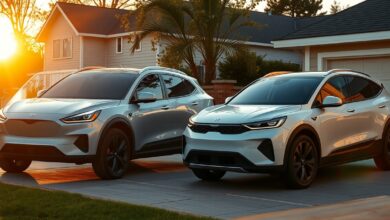

Why Electric SUVs Are Ideal for Families
The automotive landscape is shifting faster than ever, and electric SUVs are leading the charge for families seeking space, safety, and sustainability. With zero‑emission powertrains becoming mainstream, parents can finally enjoy the versatility of a traditional SUV without the guilt of a gasoline engine. In addition to lower fuel costs, many electric models now offer generous interior room, advanced driver‑assist features, and the peace of mind that comes from fewer moving parts.
Choosing the right vehicle, however, means balancing range, price, and practicality. Below, we break down the essential factors that families should consider before committing to an electric SUV under $50,000.
Key Criteria When Choosing an Electric SUV Under $50k
Not all electric SUVs are created equal. To make an informed decision, focus on the following benchmarks that directly impact daily family life.
Range and Real‑World Driving Needs
- Daily commute distance: Calculate the average miles you travel each day, including school runs and errands.
- Weekend getaways: Ensure the SUV can comfortably handle a 200‑mile round trip without frequent charging stops.
- Weather considerations: Cold climates can reduce range by 10‑20%; look for models with thermal management systems.
Passenger and Cargo Space
- Three‑row seating is a must for larger families; check legroom for the third row.
- Fold‑flat rear seats can double cargo capacity for sports gear or strollers.
- Look for a low floor height, which simplifies loading children’s car seats.
Safety and Driver‑Assist Technologies
- Standard advanced safety suites (automatic emergency braking, lane‑keeping assist, blind‑spot monitoring).
- High safety ratings from NHTSA and IIHS are non‑negotiable for family vehicles.
- Child‑seat anchor points (LATCH) and rear‑seat reminder systems.
Charging Infrastructure and Home Setup
- Level 2 home charger (240 V) is ideal; many manufacturers offer discounted wall‑box installations.
- Public fast‑charging network compatibility (e.g., Electrify America, ChargePoint) ensures road‑trip flexibility.
- Consider models with onboard chargers of 7.2 kW or higher for faster home charging.
Total Cost of Ownership (TCO)
- Federal tax credit (up to $7,500) and state incentives can bring the sticker price well below $50k.
- Lower maintenance costs: no oil changes, fewer brake replacements due to regenerative braking.
- Insurance premiums may be higher for new EVs; obtain quotes early.
Top Picks: Best Electric SUVs Under $50k for Families
After evaluating range, interior flexibility, safety features, and price, we’ve identified the most compelling electric SUVs that fit a family budget of $50,000 or less.
2024 Hyundai Ioniq 5 (Extended‑Range, 5‑Seat)
The Ioniq 5 blends futuristic styling with a spacious cabin. Its 77.4 kWh battery delivers up to 303 miles of EPA‑rated range, comfortably covering most daily needs. The flat floor and sliding rear doors make child‑seat installation a breeze.
- Starting price: $44,950 (after federal credit)
- Key family features: 8‑inch rear‑seat reminder, dual‑zone climate control, 12.3‑inch infotainment screen with Apple CarPlay and Android Auto.
- Pros: Fast charging (80% in 18 minutes at 350 kW), generous cargo space (27.2 cu ft).
- Best for: Tech‑savvy families who value design and rapid charging.
2024 Kia EV6 (Long‑Range, 5‑Seat)
The Kia EV6 shares its platform with the Ioniq 5 but offers a sportier silhouette and a slightly lower price point. With a 77.4 kWh battery, it reaches up to 310 miles on a single charge, making it one of the longest‑range options in this price bracket.
- Starting price: $42,795 (after incentives)
- Key family features: 10.25‑inch digital instrument cluster, optional all‑wheel drive for added traction, rear‑seat USB‑C ports.
- Pros: Excellent handling, 800‑V architecture for ultra‑fast charging.
- Best for: Families who enjoy a dynamic driving experience without sacrificing practicality.
2024 Ford Mustang Mach‑E (Extended‑Range, 5‑Seat)
Ford’s entry into the electric SUV market carries the iconic Mustang nameplate into a family‑friendly package. The extended‑range battery delivers 305 miles of range, and the interior offers a roomy second row with ample headroom.
- Starting price: $48,500 (before tax credit)
- Key family features: SYNC 4 infotainment with over‑the‑air updates, Ford Co‑Pilot360 safety suite, optional hands‑free driving assistance.
- Pros: Strong performance (0‑60 mph in 5.8 s), wide availability of service centers.
- Best for: Families who want a blend of performance heritage and modern EV tech.
2024 Volkswagen ID.4 (Pro S, 5‑Seat)
The ID.4 is a solid all‑rounder with a focus on comfort and practicality. Its 82 kWh battery (available in the Pro S trim) offers up to 260 miles of range, which is sufficient for most suburban families.
- Starting price: $41,990 (after federal credit)
- Key family features: Spacious rear legroom, easy‑to‑use infotainment, integrated child‑seat anchors.
- Pros: Smooth ride, generous warranty (8‑year/100,000‑mile battery).
- Best for: Budget‑conscious families that prioritize comfort and reliability.
2024 Chevrolet Bolt EUV (Premium, 5‑Seat)
While technically a crossover rather than a traditional SUV, the Bolt EUV offers SUV‑like ground clearance and a roomy cabin at an unbeatable price. Its 65 kWh battery provides up to 247 miles of range.
- Starting price: $36,495 (after incentives)
- Key family features: Super Cruise hands‑free driver assistance, rear‑view camera mirror, 10.2‑inch touchscreen.
- Pros: Most affordable entry point, excellent warranty coverage.
- Best for: Small families or first‑time EV buyers seeking value.
Comparison of Top Electric SUVs Under $50k
| Model | Starting Price (After Incentives) | EPA Range | Seating | Key Family Feature | Best For |
|---|---|---|---|---|---|
| Hyundai Ioniq 5 | $44,950 | 303 mi | 5 | Flat floor, sliding rear doors | Tech‑savvy families |
| Kia EV6 | $42,795 | 310 mi | 5 | Sporty styling, fast charging | Dynamic‑driving families |
| Ford Mustang Mach‑E | $48,500 | 305 mi | 5 | Performance heritage, Co‑Pilot360 | Performance‑oriented families |
| Volkswagen ID.4 Pro S | $41,990 | 260 mi | 5 | Comfort‑focused interior | Budget‑conscious families |
| Chevrolet Bolt EUV | $36,495 | 247 mi | 5 | Super Cruise hands‑free | First‑time EV buyers |
Understanding Total Ownership Costs for Electric SUVs
While the sticker price of an electric SUV is a crucial factor, the true cost of ownership extends beyond the purchase price. Families should evaluate fuel savings, maintenance, insurance, and depreciation to gauge long‑term affordability.
Fuel Savings vs. Gasoline SUVs
Assuming an average electricity cost of $0.13/kWh and a typical electricity consumption of 30 kWh/100 mi, the effective cost per mile for an electric SUV is roughly $0.039. In contrast, a comparable gasoline SUV at 25 mpg and $3.80 per gallon costs about $0.152 per mile. Over a 12,000‑mile year, the electric SUV saves roughly $1,350 in fuel alone.
Maintenance Advantages
- No oil changes or spark plug replacements.
- Regenerative braking reduces brake pad wear.
- Fewer moving parts mean lower likelihood of major mechanical failures.
- Most manufacturers offer an 8‑year/100,000‑mile battery warranty, providing peace of mind.
Insurance Considerations
Insurance premiums for EVs can be 5‑15% higher due to higher repair costs and specialized parts. However, many insurers now offer discounts for vehicles equipped with advanced driver‑assist systems, which most electric SUVs include as standard.
Depreciation Trends
Electric vehicles historically depreciated faster than their gasoline counterparts, but the gap is narrowing as demand rises. Models with strong brand recognition (e.g., Ford, Hyundai) tend to retain value better, especially when equipped with the latest battery technology.
Financing and Incentives for Electric SUVs
Purchasing an electric SUV under $50k can be financially savvy when you leverage available incentives and smart financing options. Below are strategies to keep your out‑of‑pocket cost low.
Federal and State Tax Credits
- The federal EV tax credit can be up to $7,500, but it phases out once a manufacturer reaches 200,000 qualifying sales. As of 2024, Hyundai, Kia, and Ford still qualify.
- Many states offer additional rebates ranging from $1,000 to $5,000, plus reduced registration fees.
- Check the U.S. Department of Energy’s “Fuel Economy” website for a state‑by‑state breakdown.
Dealer Discounts and Cash‑Back Offers
Dealerships often provide cash‑back incentives to move inventory, especially on outgoing model years. Combine these with manufacturer‑run promotions for maximum savings.
Leasing vs. Buying
Leasing an electric SUV can be attractive for families who want to upgrade every few years and avoid long‑term battery degradation concerns. However, buying typically yields a lower total cost over a 5‑year horizon, especially when you factor in tax credits.
- Leasing benefits: Lower monthly payments, covered maintenance, flexibility to switch models.
- Buying benefits: Build equity, no mileage