
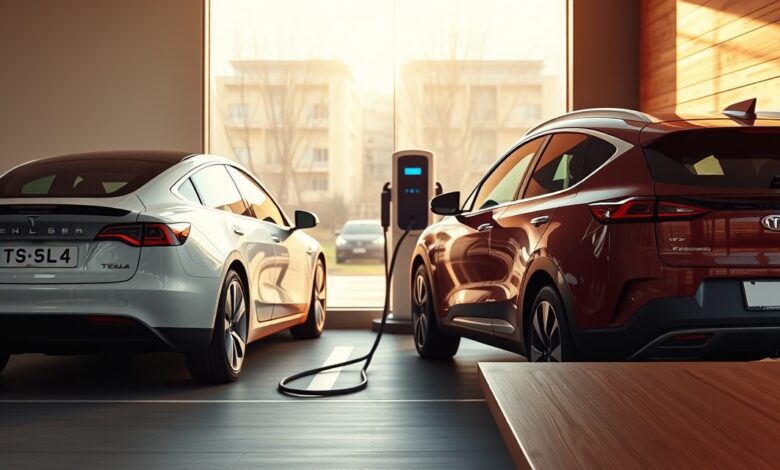
Why Electric SUVs Are Redefining Family Travel in 2024
The automotive world is in the midst of a quiet revolution, and the most noticeable shift is toward electric SUVs. Families that once prioritized gasoline‑guzzling power now crave zero‑emission range, cutting‑edge tech, and versatile cargo space. In this battle of the 2024 electric SUVs, the Tesla Model Y and the Kia EV6 emerge as two compelling options that promise to meet the demands of modern households.
Both models deliver instant torque, sleek styling, and a suite of driver‑assistance features that make daily commutes and weekend getaways feel effortless. But which vehicle truly earns the family badge of honor? Let’s dive into the details.
Performance, Range, and Driving Dynamics
When families evaluate an electric SUV, performance and real‑world range are top of the checklist. The Tesla Model Y and Kia EV6 each bring a distinct driving personality to the table.
Powertrain Overview
- Tesla Model Y: Dual‑motor all‑wheel drive (AWD) with a 75 kWh battery pack. 0‑60 mph in 4.8 seconds (Long Range) and 3.5 seconds (Performance).
- Kia EV6: Available in rear‑wheel drive (RWD) or dual‑motor AWD. The 77.4 kWh “GT” version hits 0‑60 mph in 3.5 seconds, while the standard RWD does it in 5.2 seconds.
Real‑World Range for Families
Range anxiety is still a real concern for families planning road trips. EPA estimates place the Model Y Long Range at 330 miles per charge, while the EV6’s RWD version offers 310 miles. The EV6 GT, tuned for performance, drops to about 250 miles, which may be a trade‑off for speed‑focused drivers.
Both SUVs support fast‑charging networks—Tesla’s Supercharger and the growing Electrify America network for the EV6—making it feasible to add 80 % charge in roughly 30 minutes on a highway stop.
Interior Space, Comfort, and Family‑Friendly Features
Family comfort goes beyond legroom; it includes cargo flexibility, seating configurations, and infotainment that keep kids entertained on long drives.
Seating and Cargo Capacity
- Model Y: Optional third‑row seats increase capacity to seven, though the third row is best for children. With all seats up, cargo space is modest at 12 cubic feet, expanding to 68 cubic feet with rear seats folded.
- EV6: No third row, but a spacious two‑row cabin offers generous headroom. Cargo volume starts at 24.4 cubic feet, expanding to 50.5 cubic feet with rear seats down, providing more room for strollers and sports gear.
Infotainment and Connectivity
Both SUVs feature large touchscreens, but the user experience differs. Tesla’s 15‑inch portrait display runs the proprietary UI, offering over‑the‑air updates, streaming services, and a built‑in web browser. Kia’s 14‑inch horizontal screen runs the latest Android Auto and Apple CarPlay, delivering a more familiar smartphone integration.
For families, the EV6 also includes a rear‑seat USB‑C hub and optional rear‑view camera with parking assist, while Tesla provides a rear‑camera view in the central screen but lacks dedicated rear USB ports.
Cost of Ownership: Purchase Price, Incentives, and Ongoing Expenses
Buying an electric SUV is an investment that extends beyond the sticker price. Understanding incentives, financing options, and long‑term costs helps families make a financially sound decision.
Base Pricing and Available Trims
- 2024 Tesla Model Y Long Range starts at $53,990; Performance trim at $58,990.
- 2024 Kia EV6 GT starts at $56,795; the standard RWD “Light” trim begins at $44,995.
Federal and State Incentives
Both models qualify for the federal tax credit of up to $7,500, provided the buyer’s income qualifies. Additionally, many states offer rebates ranging from $1,000 to $5,000, plus reduced registration fees for electric vehicles.
Maintenance and Energy Costs
Electric drivetrains have fewer moving parts, translating to lower routine maintenance. Tesla owners typically spend $300–$400 annually on service, while Kia’s warranty (10 years/100,000 miles for the battery) reduces long‑term risk. Charging costs vary by region, but on average, families can expect $0.13 per kWh, equating to roughly $5‑$7 per 100 miles—significantly cheaper than gasoline.
Technology, Safety, and Driver‑Assistance Systems
Safety and tech are decisive factors for families choosing an electric SUV. Both the Model Y and EV6 pack advanced driver‑assistance suites, yet they differ in execution.
Driver‑Assistance Packages
- Tesla Full Self‑Driving (FSD) Beta: $15,000 optional upgrade that adds automated lane changes, traffic‑light recognition, and limited city‑street autopilot. Regular OTA updates improve functionality.
- Kia Advanced Driver‑Assistance System (ADAS): Includes Highway Driving Assist 2, blind‑spot view monitor, and forward‑collision warning with automatic emergency braking. Standard on most trims, with a $2,500 “Premium” package for added features.
Safety Ratings
The Model Y earned a 5‑star overall rating from the NHTSA and “Good” scores across IIHS crash tests. Kia’s EV6 also achieved a 5‑star NHTSA rating and “Top Safety Pick+” from IIHS, thanks to its robust body structure and comprehensive airbag system.
Which Electric SUV Wins for the Modern Family?
Choosing between the Tesla Model Y and Kia EV6 hinges on what matters most to your household. Below is a side‑by‑side comparison that highlights the strengths of each model.
Comparison of 2024 Tesla Model Y vs. Kia EV6
| Model/Option | Starting Price | EPA Range | 0‑60 mph | Cargo Space (ft³) | Key Feature | Best For |
|---|---|---|---|---|---|---|
| Tesla Model Y Long Range | $53,990 | 330 miles | 4.8 sec | 68 (rear seats down) | Supercharger network, optional 7‑seat | Tech‑savvy families who value range |
| Tesla Model Y Performance | $58,990 | 303 miles | 3.5 sec | 68 (rear seats down) | FSD Beta capability | Performance‑oriented drivers |
| Kia EV6 GT | $56,795 | 250 miles | 3.5 sec | 50.5 (rear seats down) | Sporty design, 800V fast‑charge | Families seeking style and speed |
| Kia EV6 Light (RWD) | $44,995 | 310 miles | 5.2 sec | 50.5 (rear seats down) | Best value, spacious interior | Budget‑conscious families |
Decision Matrix for Families
- Prioritize Range? Choose the Model Y Long Range for the longest EPA rating.
- Need Maximum Cargo? Model Y offers more total cargo volume with seats folded, but the EV6 provides a larger single‑load area without folding.
- Desire Premium Tech? Tesla’s OTA updates and FSD suite lead the market, while Kia’s Android Auto integration feels more familiar to smartphone users.
- Budget Constraints? The EV6 Light undercuts the Model Y by roughly $9,000, making it a compelling entry point.
- Future‑Proofing? Tesla’s extensive Supercharger network and frequent software upgrades may offer longer‑term resale value.
Practical Buying Tips for Your First Electric SUV
Regardless of which model you lean toward, the following checklist ensures a smooth purchase process.
Assess Your Daily Driving Needs
- Calculate average weekly mileage and compare it to EPA range.
- Identify charging options at home (Level 2 charger) and along frequent routes.
- Factor in seasonal temperature impacts on battery efficiency.
Leverage Incentives and Financing
Many manufacturers offer low‑interest loans for EVs, and some credit unions provide special rates for green purchases. Combine federal tax credits with state rebates to lower the effective purchase price.
Plan for Home Charging Infrastructure
Install a 240‑volt Level 2 charger (typically 7.2 kW) to achieve full charges overnight. Verify that your garage or driveway can accommodate the charger’s electrical requirements.
Test Drive Both Models
Take each SUV on a typical family route—school drop‑off, grocery run, and a highway stretch—to gauge comfort, visibility, and ease of use for rear‑seat passengers.
Consider Long‑Term Ownership Costs
- Insurance premiums for EVs can be higher; request quotes before deciding.
- Check the manufacturer’s warranty coverage for the battery and drivetrain.
- Estimate resale value using tools like Kelley Blue Book’s EV depreciation model.
Future‑Proof Your Choice
Look for models with over‑the‑air updates, expandable software packages, and compatibility with upcoming charging standards (e.g., CCS‑2, Tesla’s North American Charger).
Final Verdict
Both the 2024 Tesla Model Y and Kia EV6 excel as electric SUVs, but they cater to slightly different family priorities. If maximum range, a larger third‑row option, and cutting‑edge autonomous features top your list, the Model Y takes the lead. If you value a lower entry price, a sportier design, and a more familiar infotainment ecosystem, the EV6 shines. Ultimately, the best electric SUV is the one that aligns with your family’s daily routine, budget, and long‑term sustainability goals.
FAQ
Is it better to lease or buy an electric SUV?
Leasing offers lower monthly payments and the ability to upgrade to newer technology every 2–3 years, which can be attractive given rapid EV advancements. Buying, however, builds equity and may be more cost‑effective over a longer horizon, especially with federal tax credits that reduce the effective purchase price.
How far can I realistically drive a used electric SUV before the battery degrades?
Most manufacturers guarantee at least 70‑80 % of original capacity after 8–10 years or 100,000 miles. In real‑world use, many owners report 90 % capacity after 5 years, making a used EV still viable for typical family mileage.
What charging speed should I look for at home?
A Level 2 (240 V) charger delivering 7.2 kW is standard and can fully charge most family‑size EVs overnight. If you have a higher‑capacity battery and want faster top‑ups, consider a 48‑amp (11 kW) unit, but ensure your home electrical panel can support it.